はじめまして。私は張藝逸と申します。東京藝術大学の博士課程で越境する演劇を研究しながら、SPACでインターンとして活動しています。
このシリーズでは、SPAC(静岡県舞台芸術センター)の新作パフォーマンス『うなぎの回遊 Eel Migration』の創作過程を記録していきます。2026年2月28日、3月1日の浜松での「ワーク・イン・プログレス公演(WIP)」と2026年4月の静岡での初演に向けて進行中の本作について、WIPまで4回に分けてお届けする予定です。第1回となる今回は、この作品に関わる「人たち」についてお伝えします。
作品について
『うなぎの回遊 Eel Migration』は、台本・演出を石神夏希が手がけるSPACの新作パフォーマンスです。SPAC俳優4名と、静岡県内に暮らすブラジルにルーツを持つ県民出演者4名、計8名が出演します。上演言語は日本語と一部ブラジルポルトガル語です。
産卵のために何千キロも旅をするうなぎの生態と、さまざまな事情で海を渡り移動を繰り返してきた人間の営み。この二つを重ね合わせながら、静岡の街で生きるブラジルにルーツを持つ人々の声に耳を傾ける作品です。
静岡県、とりわけ浜松市は、全国でもブラジルからの移住者が多く暮らす街として知られています。20世紀初頭、日本は国策として多くの国民をブラジルへと送り出しました。現在もブラジルには約190万人の日系人が暮らしています。一方、1980年代にブラジル経済が深刻なインフレに見舞われると、1990年の入管法改正をきっかけに、多くの日系ブラジル人が日本へと渡りました。浜松をはじめとした製造業の盛んな都市には、今も多くのブラジルにルーツを持つ人々が暮らしています。日本からブラジルへ、ブラジルから日本へ。この「回遊」は、うなぎの生態にも重なります。うなぎは一生の中で、約3000km離れた南洋と日本の川や湖との間を旅するのです。
石神夏希の創作哲学
劇作家として活動を始めた石神は、やがて一つの問いに向き合うようになります。劇場に足を運ぶ人だけでなく、来ない人々とどうすれば出会えるのか。そして2011年の東日本大震災を経て、もう一つの問いが加わりました。
私より話すべき言葉を持っている人がいるはず。自分が語るよりも、”聞く演劇”がしたいと思ったのも、劇場の”外”に出る活動を始めたきっかけです。
(出典:ステージナタリー「SPAC宮城聰、石神夏希への期待明かす」2025年3月4日)
石神は静岡新聞のインタビューでも、自身の活動についてこう述べています。
劇場に足を運ばない人と出会いたいという気持ちが高まり、まちに滞在してリサーチを重ね、そこで暮らす人と作品をつくるスタイルに軸足を移した。
(出典:静岡新聞「静岡人インタビュー『この人』」2024年4月27日)
『うなぎの回遊』もまた、こうした「聞く演劇」の系譜に連なる作品です。石神は出演者たちやその友人、家族、そしてうなぎの研究者に話を聞きながら、台本を執筆していきます。
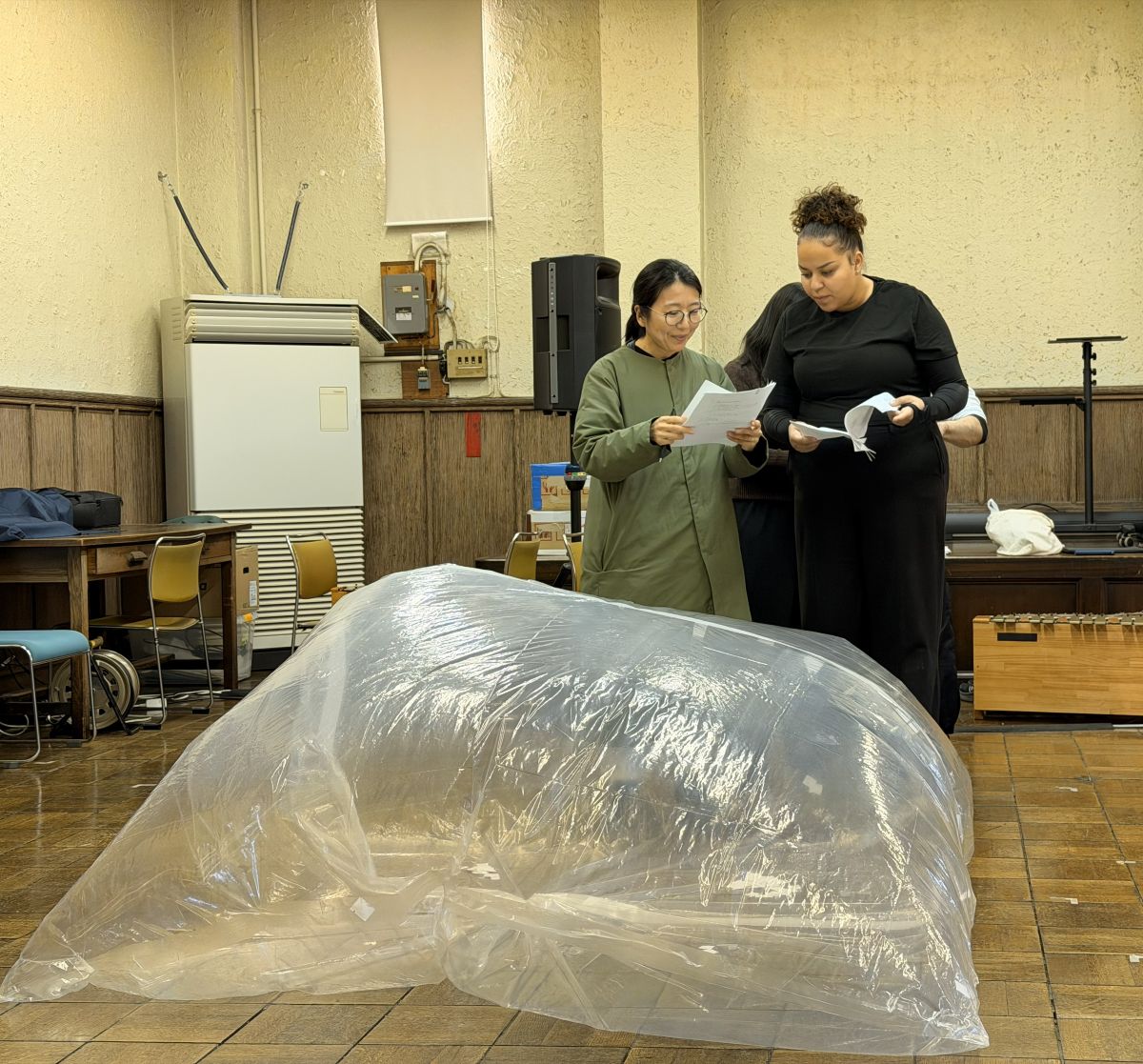
稽古場にて(撮影:張藝逸)
出演者たち
SPAC俳優として出演するのは、赤松直美、貴島豪、森山冬子、吉見亮の4名です。
この作品では、俳優たちも打楽器を演奏します。音楽を担当する棚川寛子のもと、楽器の習得に取り組んでいます。詳しくは次回お伝えします。
ブラジルにルーツを持つ県民出演者は、相川アンジェラ、アイラ・ウェンディ、ペレイラ・ハセヤマ・クレイデ、矢野陽規の4名。静岡県内から集まった、30代から50代の母親たち3名と10代の少年1名です。
4名のバックグラウンドはさまざまです。日本からブラジルに渡った日本人の子孫で、ブラジルの日系人コミュニティで育った、いわゆるデカセギ第一世代。デカセギに来た日系人の両親と共に4歳で来日した、デカセギの子ども世代。ブラジルで日系人と結婚して来日したが離婚、一度ブラジルに戻ったが子どもたちと日本に戻ってきたブラジル人で、日本語があまり話せない方。デカセギで来た父と日本人の母を持ち、日本生まれ日本育ちでポルトガル語がほとんど話せない10代の少年。
全員、俳優としてはアマチュアです。しかし、自分の人生のどこかでかつて舞台芸術に携わっていたことがある、もしくは舞台芸術を学んでいたが、日本で生きていくために諦めざるをえなかった人たちです。
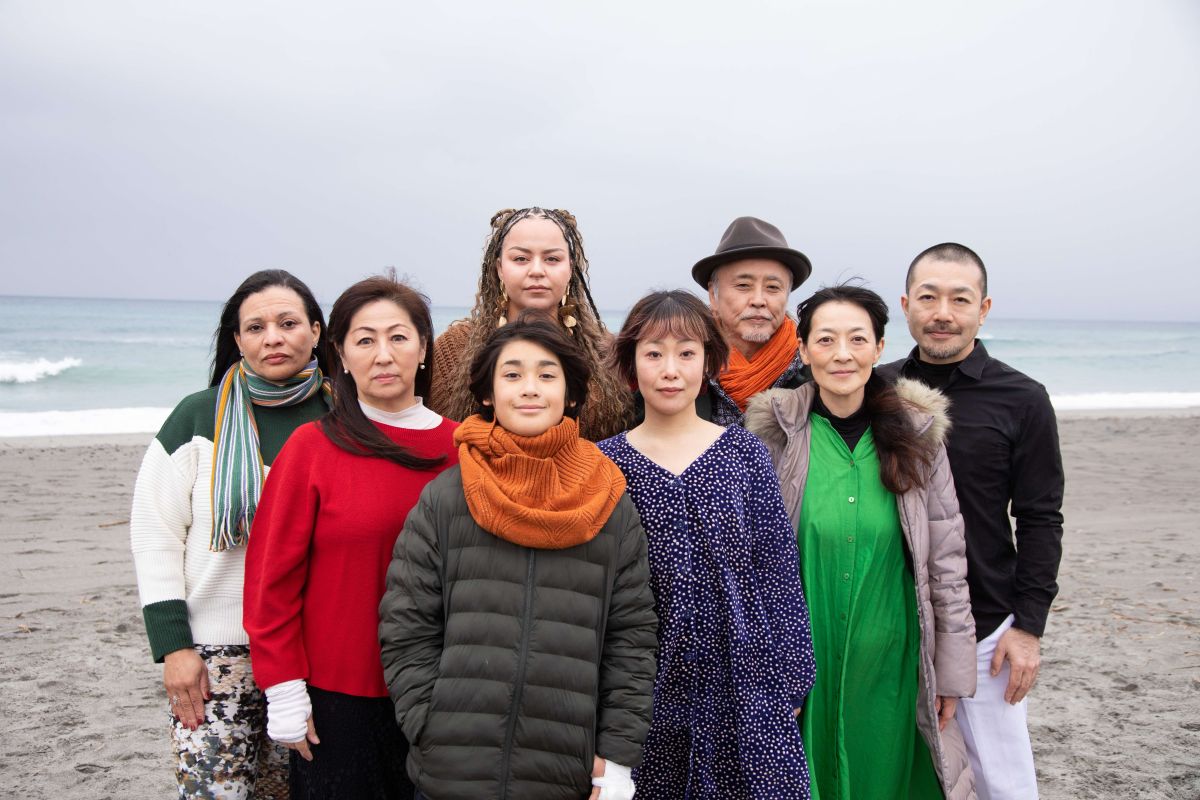
撮影:鈴木竜一朗
時間をかけること
『うなぎの回遊 Eel Migration』の創作は、2024年6月のリサーチ開始から2026年4月の初演まで、約2年にわたります。稽古は月に1〜2回程度、主に浜松で行われています。なぜこれほど時間をかけるのか。それは、異なる言語や文化的背景を持つ人々の間で信頼関係を築くためです。
稽古場でのクリエーションの時間以外にも、出演者たちは時間を共にしています。浜松で開催されるブラジルフェスティバルに一緒に出かけてサンバを踊ったり、クリスマスには「アミーゴ・セクレート(Amigo Secreto)」でプレゼントを交換したり。アミーゴ・セクレートは、ブラジルで広く親しまれているプレゼント交換の習慣で、事前にくじ引きで誰にプレゼントを贈るかを決め、当日まで秘密にしておくというものです。稽古場の外で過ごすこうした時間が、舞台の上での関係を支えています。
石神の創作現場の特徴として、毎回稽古の冒頭には「チェックイン」と呼ばれる時間が設けられています。1時間から1時間半ほど、出演者やスタッフ全員が輪になって座り、今の自分の状態や、最近気になっていることをシェアします。あらかじめ決められたお題について話すのではなく、それぞれが今関心を持っていること、考えていることを自由に語り合う。そこにはSPAC俳優も県民出演者もスタッフもいて、立場の上下なく、全員が同じように発言します。この時間には二つの意味があります。一つは、互いを知ること。もう一つは、ここで語られるエピソードが台本の素材になること。石神は出演者たちの話を聞きながら、それを作品の中に織り込んでいきます。
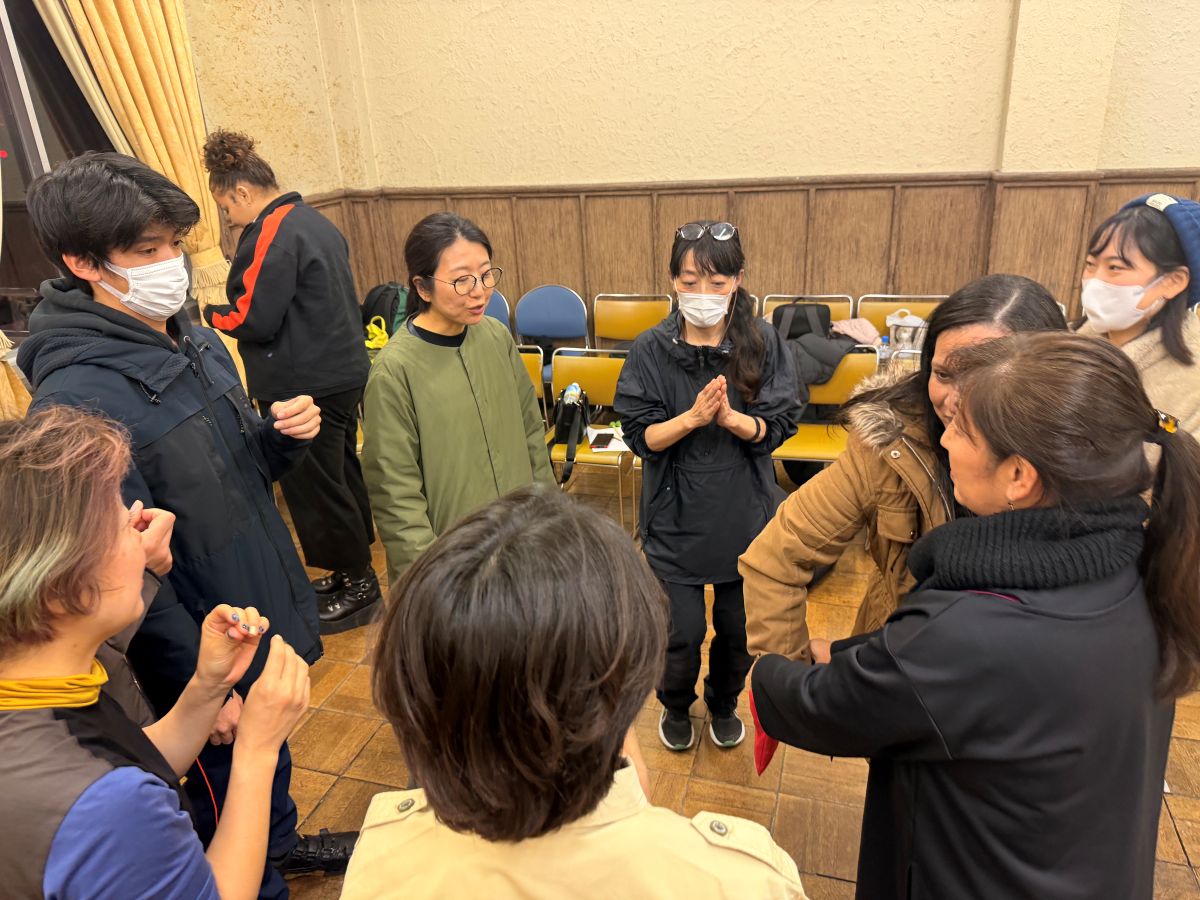
アミーゴ・セクレートでくじを引くプロダクションメンバーたち(撮影:張藝逸)
稽古場で見たこと
私としては、稽古場では、SPAC俳優たちが県民出演者をサポートする姿が印象的でした。といっても、それは「教える/教わる」という関係ではありません。県民出演者たちは俳優としてはアマチュアですが、それぞれの人生の中で舞台芸術に深く関わった経験を持っています。SPAC俳優たちは彼らを「素人」として扱うのではなく、それぞれの違いを認めながら、互いに支え合う関係を築いています。石神は稽古場で、一人ひとりに丁寧に向き合います。それぞれの出演者が自分のペースで参加できる空間を作りながら、全体を緩やかにまとめていく。その姿勢が、「聞く演劇」という言葉の意味を体現しているように感じました。
公演情報
『うなぎの回遊 Eel Migration』ワーク・イン・プログレス公演
日程:2026年2月28日(土)、3月1日(日)各日13:30開演(終演後、アーティストトークあり)
会場:浜松科学館 みらい~ら ホール
上演時間:60分以内(予定)
上演言語:日本語(一部ポルトガル語)
静岡初演
「SHIZUOKAせかい演劇祭2026」にて初演いたします。
詳細は後日発表いたします。
Those of Us Who Migrate: SPAC’s New Production “Eel Migration” WIP ①
Hello. My name is Yiyi Zhang. I am a doctoral student at Tokyo University of the Arts researching transcultural theater, and I have been working as an intern at SPAC.
In this series, I will document the creative process of SPAC (Shizuoka Performing Arts Center)’s new performance, “Eel Migration.” This production is heading toward a Work-in-Progress showing (WIP) in Hamamatsu on February 28 and March 1, 2026, and its premiere in Shizuoka in April 2026. I plan to share this journey in four installments leading up to the WIP. In this first installment, I will introduce the people involved in this production.
About the Production
“Eel Migration” is a new SPAC performance with script and direction by Natsuki Ishigami. It features four SPAC actors and four community performers with Brazilian roots living in Shizuoka Prefecture. The performance languages are Japanese and some Brazilian Portuguese.
The ecology of eels, which travel thousands of kilometers to spawn, parallels the lives of humans who have crossed oceans and moved repeatedly for various reasons. Layering these two narratives, the production listens to the voices of people with Brazilian roots living in Shizuoka.
Shizuoka Prefecture, particularly Hamamatsu City, is known as one of the cities in Japan with the largest populations of Brazilian immigrants. In the early 20th century, Japan sent many citizens to Brazil as a national policy. Today, approximately 1.9 million people of Japanese descent still live in Brazil. Conversely, when Brazil’s economy suffered severe inflation in the 1980s, many Japanese Brazilians migrated to Japan following the 1990 revision of Japan’s immigration law. Cities with thriving manufacturing industries, including Hamamatsu, continue to be home to many people with Brazilian roots. From Japan to Brazil, from Brazil to Japan—this “migration” mirrors the ecology of eels, which travel approximately 3,000 kilometers between the South Pacific and Japan’s rivers and lakes during their lifetime.
Natsuki Ishigami’s Creative Philosophy
Beginning her career as a playwright, Ishigami eventually confronted a question: How could she meet not only those who come to the theater, but also those who don’t? After the 2011 Great East Japan Earthquake, another question emerged.
“There must be people who have more important words to speak than I do. Wanting to create ‘theater that listens’ rather than speaking myself was also what led me to start working ‘outside’ the theater.”
(Source: ステージナタリー「SPAC宮城聰、石神夏希への期待明かす」2025年3月4日)
In an interview with Shizuoka Shimbun, Ishigami also described her practice:
“My desire to meet people who don’t come to the theater grew stronger, and I shifted my focus to staying in communities, conducting research, and creating work with the people who live there.”
(Source: 静岡新聞「静岡人インタビュー『この人』」2024年4月27日)
“Eel Migration” continues this lineage of “theater that listens.” Ishigami writes the script while listening to the performers, their friends and families, and eel researchers.
In rehearsal (Photo: Yiyi Zhang)
The Performers
The four SPAC actors in the production are Naomi Akamatsu, Tsuyoshi Kijima, Fuyuko Moriyama, and Ryo Yoshimi. In this production, the actors also play percussion instruments. Under the guidance of composer Hiroko Tanakawa, they are learning to play these instruments. I will share more details in the next installment.
The four community performers with Brazilian roots are Angela Aikawa, Ayla Wendy, Cleide Pereira Haseyama, and Haruki Yano. They include three mothers in their 30s to 50s and one teenage boy, all from within Shizuoka Prefecture.
Their backgrounds vary greatly. Among them is a descendant of Japanese who emigrated to Brazil, raised in Brazil’s Japanese community, called the first generation of “dekasegi” (migrant workers). Another came to Japan at the age of four with Japanese Brazilian parents who had come as dekasegi—the children’s generation of dekasegi workers. There is also a Brazilian woman who married a Japanese Brazilian in Brazil and came to Japan, later divorced, returned to Brazil once, and then came back to Japan with her children, speaks little Japanese. And there is a teenage boy with a dekasegi father and Japanese mother, born and raised in Japan, who speaks almost no Portuguese.
All of them are amateur performers. However, each has either worked professionally in performing arts at some point in their lives or studied performing arts but had to give up that path to make a living in Japan.
Photo: Ryuichiro Suzuki
Taking Time
The creation of “Eel Migration” spans approximately two years, from the start of research in June 2024 to the premiere in April 2026. Rehearsals take place once or twice a month, mainly in Hamamatsu. Why take so much time? It is to build trust among people with different languages and cultural backgrounds.
Beyond rehearsal time in the studio, the cast members also spend time together outside. They go to Brazilian festivals held in Hamamatsu and dance samba together. At Christmas, they exchange presents through “Amigo Secreto.” Amigo Secreto is a Brazilian gift-exchange tradition where participants draw lots beforehand to determine who they will give a present to, keeping it secret until the day of the exchange. This time spent outside the rehearsal space supports the relationships built on stage.
A distinctive feature of Ishigami’s creative process is the “check-in” at the beginning of each rehearsal. For about an hour to an hour and a half, all performers and staff sit in a circle and share what has been on their minds lately. Rather than discussing predetermined topics, each person freely talks about their current state and what they are currently interested in or thinking about. SPAC actors, community performers, and staff are all present, and everyone speaks equally regardless of position. This time serves two purposes: first, to get to know one another; and second, because the episodes shared here become material for the script. Ishigami listens to the performers’ stories and weaves them into the work.
Production members drawing lots for Amigo Secreto (Photo: Yiyi Zhang)
What I Saw in Rehearsal
In the rehearsal space, I was struck by how the SPAC actors support the community performers. However, this is not a “teaching/learning” relationship. While the community performers are amateurs as actors, each has deep experience with performing arts in their own lives. The SPAC actors don’t treat them as “beginners” but build relationships of mutual support while acknowledging their differences. Ishigami engages carefully with each individual in the rehearsal space. She creates a space where each performer can participate at their own pace while gently bringing the whole together. Her approach embodies the meaning of “theater that listens.”
Performance Information
“Eel Migration” Work-in-Progress Showing
Dates: February 28 (Sat) and March 1 (Sun), 2026, 1:30 PM(Artist talk after each performance)
Venue: Hamamatsu Science Museum “Mirai-ra” Hall
Running time: Under 60 minutes (tentative)
Languages: Japanese (with some Portuguese)
Shizuoka Premiere
We will premiere at the World Theater Festival Shizuoka.
Details will be announced at a later date.


