こんにちは。張藝逸です。東京藝術大学の博士課程で越境する演劇を研究しながら、SPAC(静岡県舞台芸術センター)でインターンとして活動しています。SPAC新作パフォーマンス『うなぎの回遊 Eel Migration』の創作過程を記録するシリーズの第2回をお届けします。前回は作品に関わる「人たち」を紹介しました。今回は「音楽」に焦点を当てます。
一つのメロディの中にいた
浜松のブラジルフェスティバル。県民出演者のアンジェラが、サンバダンサーとしてステージに立ちました。音楽が鳴り、アンジェラが踊り始めます。それを見ていた石神、棚川、貴島、吉見、森山、制作スタッフたち。リズムが会場を満たすと、振り付けを教わったわけでもないのに、全員が踊り出しました。笑い声の中で、言葉が通じなくても分かち合えるものがありました。稽古場に戻ると、誰かが1993年のカーニバルのテーマソングを口ずさみ始めました。一人が歌い、二人が続き、やがて全員の声が重なりました。ポルトガル語の歌詞がわかる人も、わからない人も、一つのメロディの中にいました。
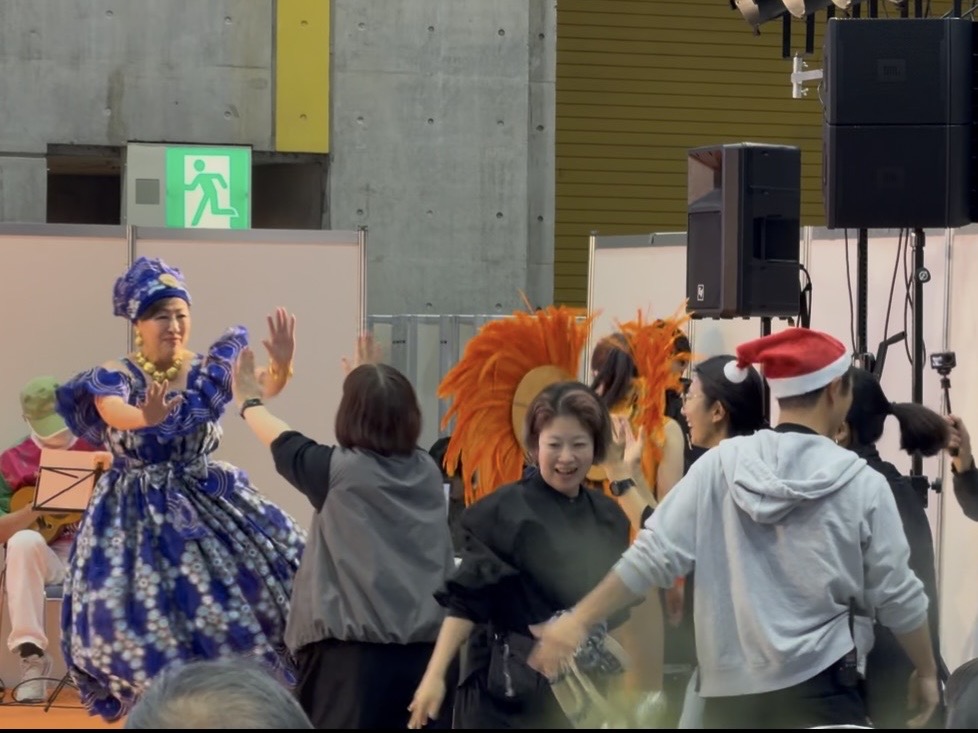
ブラジルフェスティバルにて(撮影:張藝逸)
ただし、その熱狂をそのまま舞台に持ち込むわけではありません。企画段階では、サンバを音楽に取り入れることについて慎重な議論がありました。「ブラジルらしさ」を安易に演出すれば、ステレオタイプの再生産になりかねないからです。しかし、一緒に体を動かし、声を重ねた経験は、稽古場のコミュニケーションの土台となりました。重要なのは、出演者たちの体から立ち上がるものに耳を傾けるという姿勢です。
この姿勢は、作品全体の音楽づくりに通底しています。
台本を聴く
『うなぎの回遊』の音楽を手がけるのは棚川寛子です。SPACの舞台音楽を20年以上にわたり担当してきました。棚川は楽譜を使いません。「台本を読みます。するとその台詞が持っているリズムみたいなものが見えてくるんです」「私にとっては台本が楽譜なので」と語っています(出典:Performing Arts Network Japan「宮城聰の劇世界を支える 舞台音楽家の棚川寛子」)。台本の言葉のリズムを聴き取り、そこから音のフレーズを立ち上げていきます。
SPACの舞台では、音楽は録音ではなく、俳優たちの生演奏で奏でられます。棚川がフレーズをつくり、一人の俳優に演奏してもらう。次に別のフレーズを重ね、もう一人、さらにもう一人と重ねていきます。鉄琴、木琴、鼓、シェイカー、ハンドパン、レインディスク、トーンチャイム。この作品で使われる楽器も、そうして一つずつ層を成していきました。楽譜がないから、演奏者は隣の人の音を聴くしかありません。間違えても止まらず、周りの音を聴いて合わせ直す。耳と体で成り立つアンサンブルです。
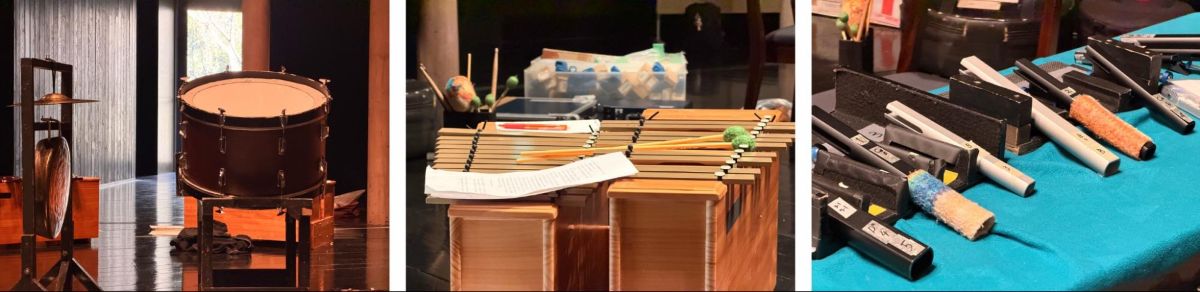
稽古場にある楽器たち(撮影:張藝逸)
聴こえない言葉から音楽をつくる
『うなぎの回遊』では、棚川のこの方法が新たな展開を見せています。オープンスタジオの段階で生まれた深海の音楽世界、水中、羊水のイメージから、ハミングが少しずつ歌になり、鉄琴や鼓の響きが重なっていく。その音楽が、その後の稽古を経てさらに変容していきました。ある稽古で、一つの歌詞の歌い方をめぐって議論が起きました。語尾を上げるか、平坦にするかで、肯定にも否定にも、ただの事実にも聞こえます。日本語のイントネーションを、全員で聴き合いながら探る。その繊細さの中から、もう一つの問いが浮かび上がりました。理解できない言語の響きから、音楽は生まれるのか。
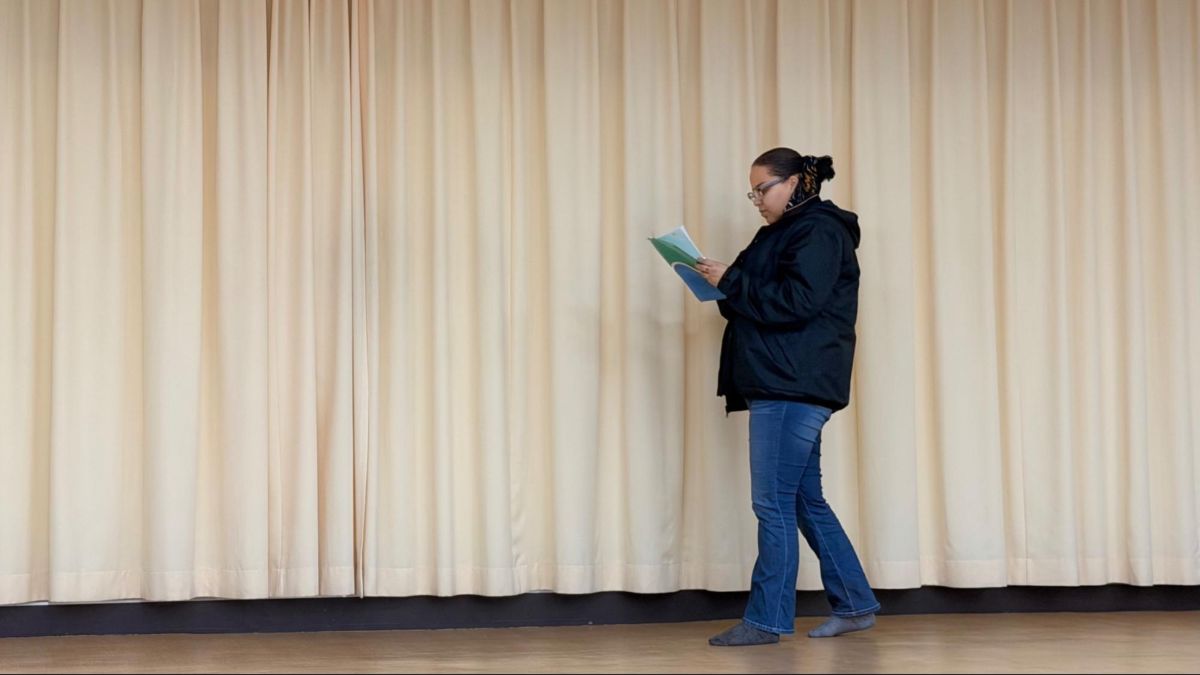
歌練習をしているアイラ(撮影:張藝逸)
棚川とSPAC俳優たちはポルトガル語がわかりません。この作品では、理解できない言語の響きそのものが音楽を動かしています。それを最もよく表しているのが、アイラが歌うポルトガル語の歌の創作過程です。まず、アイラがポルトガル語の歌詞を書きました。それを日本語に翻訳し、棚川がその日本語歌詞をもとに音楽をつくります。SPAC俳優の貴島豪と森山冬子がメロディを歌いながら形にしていきました。ある日、貴島が自分なりのポルトガル語で歌ってみると、棚川は驚きました。「ポルトガル語で聞いたら、雰囲気は全然違います」。意味はわからなくても、言語の響きが変わるだけで音楽が変容します。
しかし、日本語から生まれたメロディに、元のポルトガル語の歌詞はそのままでは乗りません。音節の数が違うからです。アイラはメロディに合わせてポルトガル語の歌詞を何度も書き直していきます。隣では貴島がメロディを鼻歌で支え、「大丈夫、体に入っちゃうから」と棚川は笑います。こうして日本語のメロディとポルトガル語の歌詞が出会い、この歌が形になりつつあります。ブラジル音楽でもなく、SPACの従来の音楽でもない。ポルトガル語がわかるかどうかに関わらず、その響きは届きます。ぜひ現場で感じてほしい一曲です。
言語を超えた「聴く」は、楽器演奏にも広がっています。この作品では、県民出演者のアンジェラが鉄琴を担い、演出部のスタッフも加わりました。全員が、この作品の楽器に向き合っています。アンジェラが不安を感じていたとき、SPAC俳優の貴島がカウントで見守り、吉見亮が「誰かに合わせるんじゃなくて、聴きながらやっていこう」とまとめました。「教える」のではなく「聴き合う」ことで、アンサンブルが成り立っていきます。
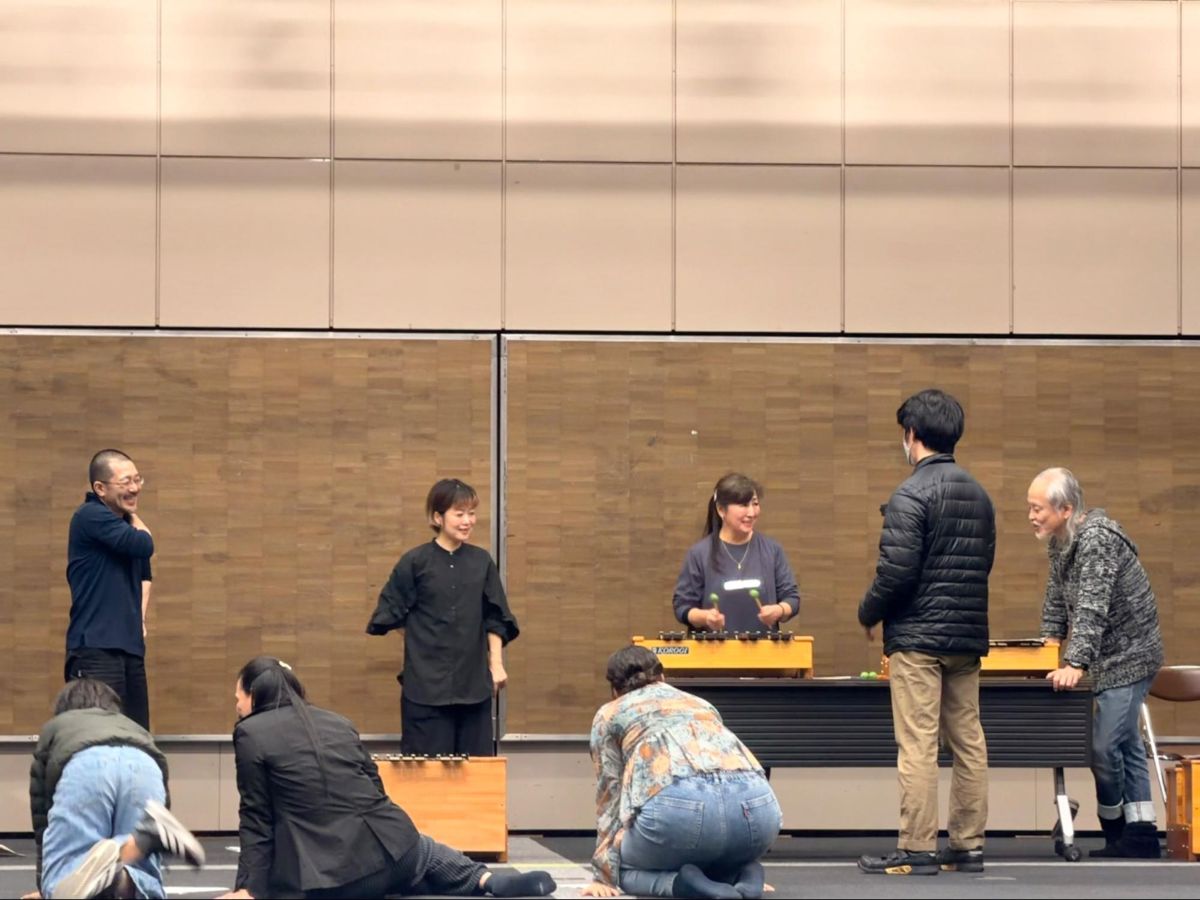
稽古場での楽器練習(撮影:張藝逸)
客席で、耳を傾ける
『うなぎの回遊 Eel Migration』の音楽は、理解の手前から始まっています。楽譜が読めなくても、隣の人の音を聴くことはできる。言葉の意味がわからなくても、その響きに耳を傾けることはできる。鉄琴の澄んだ音、鼓の響き、ポルトガル語の歌の波。ぜひ会場で耳を傾けてください。そしてその音が生まれるまでに重ねられてきた時間のことも。
次回は、この作品のもう一つの主役であるうなぎについてお伝えします。2026年2月の浜松でのワーク・イン・プログレス公演を経て、4月の静岡初演へ。今この瞬間にしか存在しない音楽が、聴き合う関係の中から日々生まれています。
公演情報
『うなぎの回遊 Eel Migration』ワーク・イン・プログレス公演
日程:2026年2月28日(土)、3月1日(日)各日13:30開演(終演後、アーティストトークあり)
会場:浜松科学館 みらい~ら ホール
上演時間:60分以内(予定)
上演言語:日本語(一部ポルトガル語)
静岡初演
「SHIZUOKAせかい演劇祭2026」にて初演いたします。
詳細は後日発表いたします。
Listening to the Person Next to You: SPAC’s New Production “Eel Migration” WIP ②
Hello. My name is Yiyi Zhang. I am a doctoral student at Tokyo University of the Arts researching transcultural theater, and I have been working as an intern at SPAC (Shizuoka Performing Arts Center). This is the second installment in a series documenting the creative process of SPAC’s new performance, “Eel Migration.” In the previous installment, I introduced the “people” involved in the production. This time, I focus on the music.
Inside One Melody
At a Brazilian festival in Hamamatsu, community performer Angela took the stage as a samba dancer. The music started and Angela began to dance. Watching from the crowd were Ishigami, Tanakawa, Kijima, Yoshimi, Moriyama, and the production staff. As the rhythm filled the venue, everyone started dancing—without having learned any choreography. Amid the laughter, something was shared even across languages. Back in the rehearsal space, someone began humming a 1993 carnival theme song. One voice became two, then more, until everyone was singing together. Whether they understood the Portuguese lyrics or not, they were all inside one melody.
At the Brazilian festival (Photo: Yiyi Zhang)
However, the production does not simply transplant the excitement that Brazilian music has onto the stage. During the planning phase of this production, there were careful discussions about incorporating samba into the stage music. Using “Brazilianness” carelessly may risk reproducing stereotypes. Yet, the experience of moving together, of layering voices, became the foundation of communication in the rehearsal space. What matters is the commitment to listening to what emerges from the performers’ bodies.
This commitment runs through the entire music-making process of the production.
Listening to the Script
The music for “Eel Migration” is composed by Hiroko Tanakawa, who has created music for SPAC productions for over twenty years. Tanakawa does not use written scores. “I read the script. Then I start to see something like the rhythm that the dialogue carries,” she says. “For me, the script is the score” (Source: Performing Arts Network Japan, “Hiroko Tanakawa: The Stage Music Composer Behind Satoshi Miyagi’s Theatrical World“). She listens to the rhythm within the words of the text and builds musical phrases from it.
In SPAC productions involving Tanakawa, the music is not recorded but performed live by the actors. Tanakawa creates a phrase and has one actor play it. Then she layers another phrase on top, adding one performer, then another. Glockenspiel, xylophone, drum, shaker, handpan, Otofurashi (a type of tongue drum), tone chimes—the instruments in this production were built up layer by layer in this way. Without scores, the performers have no choice but to listen to the person next to them. If someone makes a mistake, they don’t stop; they listen to the sounds around them and find their way back in. It is an ensemble sustained by the ear and body.
Instruments in the rehearsal space (Photo: Yiyi Zhang)
Making Music from Words You Cannot Understand
In “Eel Migration,” Tanakawa’s method of making stage music takes on new dimensions. From the deep-sea musical world that emerged during the open studio—born of images of water and amniotic fluid—humming gradually became song, as the tones of glockenspiel and drum layered on top. Through the rehearsal process, the music continued to evolve. During one rehearsal, a discussion arose over how to sing a particular lyric. Depending on whether the intonation rose or stayed flat, the line could sound like affirmation, negation, or simple fact. The entire group explored the nuances of Japanese intonation together, listening closely to each other. Out of this delicate process, another question emerged: can music be born from the sounds of a language you cannot understand?
Ayla practicing her song (Photo: Yiyi Zhang)
Tanakawa and the SPAC actors do not speak Portuguese. In this production, the very sounds of a language they cannot understand are what drive the music. This is best illustrated in the creation of a Portuguese song sung by community performer Ayla. First, Ayla wrote the lyrics in Portuguese. They were then translated into Japanese, and Tanakawa composed the music based on that Japanese translation. SPAC actors Tsuyoshi Kijima and Fuyuko Moriyama sang the melody into shape. One day, when Kijima sang in his own approximation of Portuguese, Tanakawa was taken aback. “When I heard it in Portuguese, the atmosphere was completely different.” Even without understanding the meaning, the shift in the language’s sounds transformed the music.
Yet the original Portuguese lyrics do not fit onto a melody born out of Japanese one. The number of syllables is different. Ayla rewrites the Portuguese lyrics again and again to match the melody. Beside her, Kijima hums the melody in support. “Don’t worry, it’ll get into your body,” Tanakawa says with a smile. In this way, a Japanese melody and Portuguese lyrics met, and the song was taking shape. It is neither Brazilian music nor SPAC’s conventional music. Whether or not you understand Portuguese, its sounds will reach you. This is a song best experienced in person.
This “listening” that transcends language influences the instrumental performance as well. In this production, community performer Angela takes on the glockenspiel, and assistant director has also joined the ensemble. Everyone is engaging with the instruments for this production. When Angela felt uneasy, SPAC actor Kijima kept counting to support her, and Ryo Yoshimi summed it up by saying “It’s not about matching someone else; it’s about listening as you go.” The ensemble comes together not through “teaching” but through “listening to each other.”
Instrument practice in the rehearsal space (Photo: Yiyi Zhang)
Lending Your Ears from the Audience
The music of “Eel Migration” begins from a place before understanding. Even if you cannot read a score, you can listen to the person next to you. Even if you cannot understand the words, you can listen to their sounds. The clear tone of the glockenspiel, the resonance of the drum, the wave of Portuguese song—please come and lend your ears. And think of the time that has been layered to bring those sounds into being.
In the next installment, I will turn to the production’s other protagonist: the eel. From the Work-in-Progress showing in Hamamatsu in February 2026 to the Shizuoka premiere in April—music that exists only in this moment is being born every day, out of relationships built on listening.
Performance Information
“Eel Migration” Work-in-Progress Showing
Dates: February 28 (Sat) and March 1 (Sun), 2026, 1:30 PM(Artist talk after each performance)
Venue: Hamamatsu Science Museum “Mirai-ra” Hall
Running time: Under 60 minutes (tentative)
Languages: Japanese (with some Portuguese)
Shizuoka Premiere
We will premiere at the World Theater Festival Shizuoka.
Details will be announced at a later date.


