こんにちは。張藝逸です。東京藝術大学の博士課程で越境する演劇を研究しながら、SPAC(静岡県舞台芸術センター)でインターンとして活動しています。SPAC新作パフォーマンス『うなぎの回遊 Eel Migration』の創作過程を記録するシリーズの第3回をお届けします。第1回では作品に関わる「人たち」を、第2回では「音楽」をご紹介しました。今回は、この作品のもう一人の主役、うなぎの話をします。
紀元前4世紀、アリストテレスはうなぎの卵を探しました。見つけられず、「泥の中から自然発生する」と書いています。19世紀末、若きフロイトも精巣を探して何百匹と解剖しましたが、「夢の中にまでウナギの細胞が現れて自分を苦しめる」と嘆いて終わりました。2026年の現在も、うなぎの産卵の瞬間を見届けた人間は一人もいません。1億年前からこの地球にいるのに、誰も見つけられなかった卵。人間には、うなぎが分からない。この作品は、そこから始まっています。
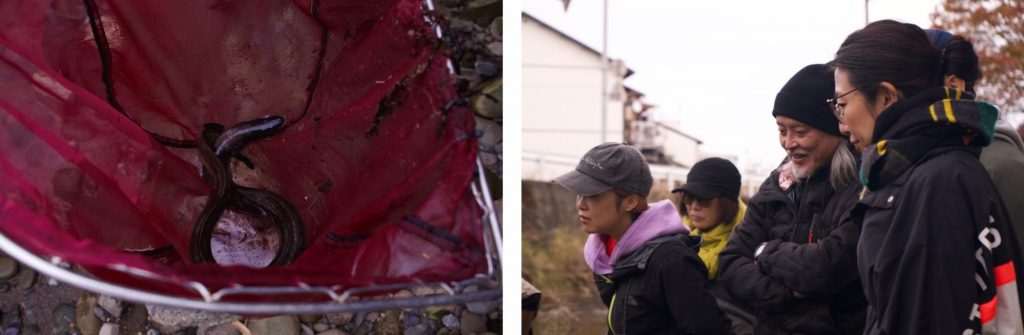
川でのうなぎ生態調査(撮影:SPAC制作部@坂中季樹)
うなぎに会いに行く
『うなぎの回遊 Eel Migration』はリサーチ・クリエーション、つまりフィールドワークを重ねながら作品を立ち上げていく手法で作られています。創作チームは、何度もうなぎに「会いに行き」ました。
うなぎ研究者の海部健三氏(中央大学)の協力のもと、静岡県内の川で生態調査が行われました。出演者たちが川に入り、研究者の作業を間近で見ます。水は冷たく、流れは見た目より強い。しゃがんで石の裏をのぞいても、何もいないように見える。でも電流を流した瞬間、足元からうなぎがするりと現れる。ずっとそこにいたのに、見えなかっただけ。この川を知っている人には見えている世界が、私たちにはまったく見えていない。何年も通っている研究者でさえ、毎回、捕まえたうなぎの半分以上が「はじめまして」の個体だといいます。その向こうに、人間の調査が届かない場所で営まれている、うなぎたちの暮らしがまるごとあるのです。
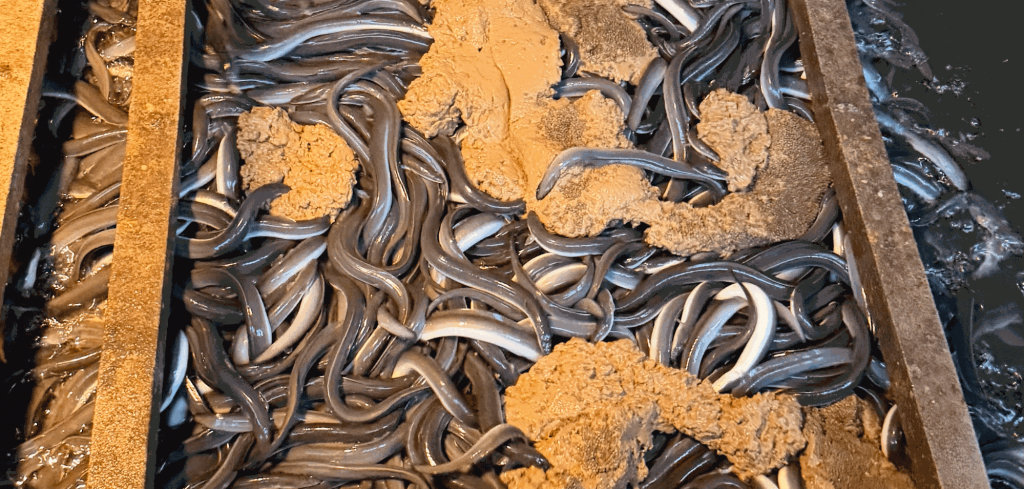
養殖うなぎ(撮影:張藝逸)
川では、野生のうなぎに会いました。人間の目には見えない場所で、うなぎはうなぎの暮らしをしていた。では、人間が管理する場所にいるうなぎはどうなのか。創作チームは浜松のうなぎ養殖場を訪ねました。何十年もうなぎと向き合ってきた養殖業者の方が案内してくれます。「養殖と天然、人間も同じですよ。環境によって違うだけ。習慣が違うだけ。外国人と同じだと思っている」。
うなぎは、ある日突然、体の色を変え始めます。川にいても、池の中にいても、海の生き物に戻っていく。何がそのスイッチを入れるのか、サイズでもなく、年齢でもない。誰にも分からない。人間が何をしようと、うなぎはうなぎの時間で動いているのです。
うなぎのいない稽古場で
こうしたリサーチの体験は、稽古場に持ち帰られ、やがて作品の中に現れていきます。それらは稽古場の中で、出演者たちの身体や声を通して、別のかたちに変わりつつあります。リサーチで得たものがどう舞台に立ち上がるのか、ぜひ客席で確かめてください。稽古場では、さまざまな素材を使った実験も繰り返されています。風船が別のものに見える瞬間、日常の道具が得体の知れない存在に変わる瞬間。何が作品に残り、何が消えていくのかは、まだ誰にも分かりません。
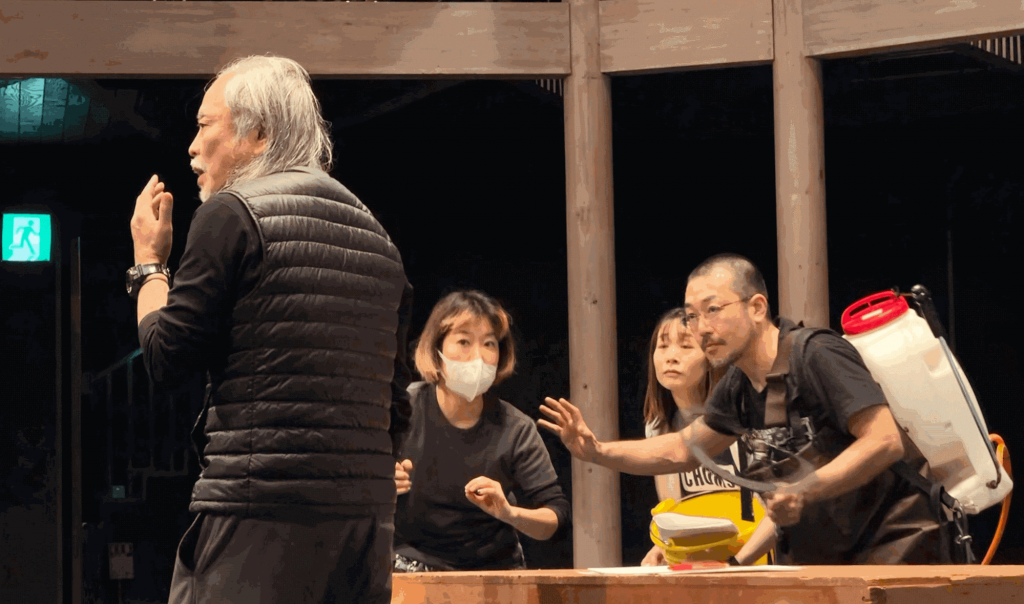
稽古場にて/舞台芸術公園「楕円堂」(撮影:張藝逸)
12月の稽古場で、SPAC俳優たちがうなぎに関する記事を読み合わせていたときのことです。違法流通、絶滅危惧。重い話題が続いていました。休憩前、俳優のひとりがぽつりと言いました。「移民問題と同じだね」。誰もそこに話を持っていこうとしていなかった。うなぎの話をしていたはずが、いつの間にか、この作品に関わる人たち自身の人生と重なっていた。その空気の中から、一つの歌が生まれました。
わたしたちは間違える、わたしたちは何度でも繰り返す
うなぎたちは間違えない、うなぎたちは何度でも繰り返す
1億年、誰にも教わらずに海と川のあいだを行き来してきたうなぎ。人間は間違えながら、やり直しながら、繰り返す。
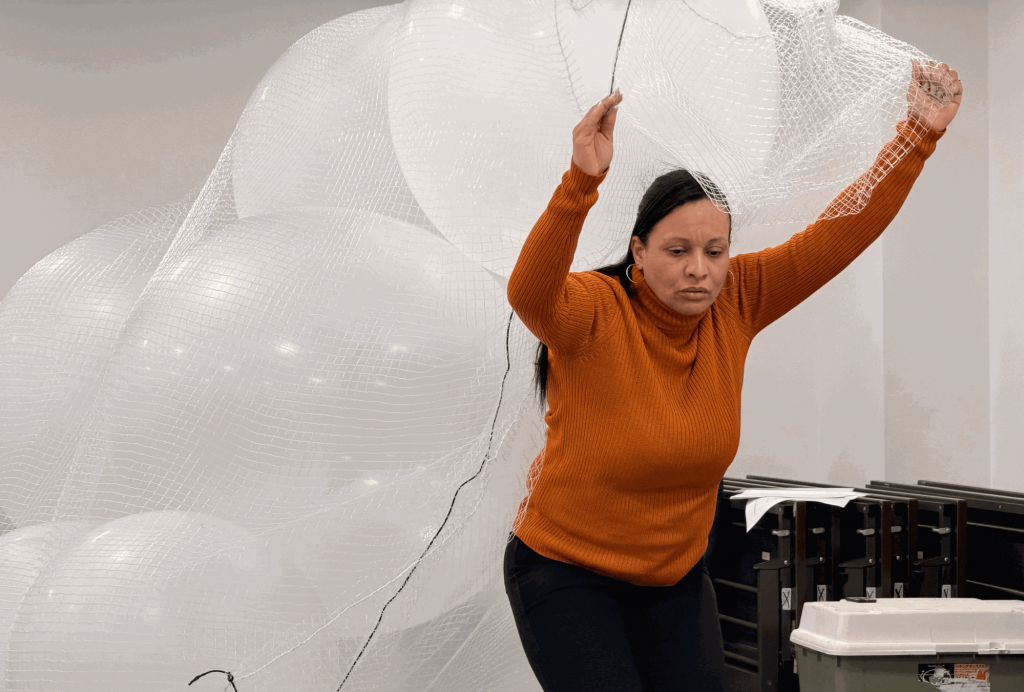
稽古場にて/浜松市福祉交流センター(撮影:張藝逸)
うなぎは繰り返し、そして移動する。この創作も同じように、稽古のたびに場所が変わります。SPACの「楕円堂」や「てあとろん」(いずれも静岡県舞台芸術園内)のほかに、浜松市福祉交流センター、木下恵介記念館、クリエート浜松にも足を運んでいます。馴染みのない空間に出演者たちがたどり着き、そこで始める。稽古場の中では、日本語とポルトガル語が行き来し、誰がリードし誰が支えるかも場面ごとに入れ替わる。石神夏希(台本・演出)は稽古場で「やりながら考える」「失敗してもいいから、やってみて発見するものがある」と語っていました。事前に全部を決めるのではなく、待つ。この創作は、うなぎに似たやり方で進んでいます。
この記事を書きながら、稽古場で見聞きしたことを思い返していました。川の調査のこと、養殖場で聞いた言葉、歌詞が初めて歌われた日のこと。一つひとつは別々の出来事なのに、振り返ると、全部うなぎにつながっている。うなぎは稽古場にいません。でも、稽古場で起きていることの奥に、いつもうなぎがいるのです。
次回、第4回では、2月28日・3月1日に迫ったワーク・イン・プログレス公演の見どころをご案内します。どうぞお楽しみに。
公演情報
『うなぎの回遊 Eel Migration』ワーク・イン・プログレス公演
日程:2026年2月28日(土)、3月1日(日)各日13:30開演(終演後、アーティストトークあり)
会場:浜松科学館 みらい~ら ホール
上演時間:60分以内(予定)
上演言語:日本語(一部ポルトガル語)
静岡初演
「SHIZUOKAせかい演劇祭2026」にて初演いたします。
日程:2026年4月25日(土)、26日(日)、29日(水・祝)各日18:30開演
会場:舞台芸術公園 野外劇場「有度」
上演時間:90分(予定)
上演言語/字幕:
日本語上演(一部ブラジルポルトガル語)/日本語・英語・ブラジルポルトガル語字幕
*関連企画
フェスティバルcafe&bar ― Festa Brazil(ブラジル・ナイト)
4月25日(土)、26日(日)15:00~22:00
4月29日(水・祝)12:00~22:00
会場:せかいの劇場ミニミュージアム「てあとろん」
Humans Cannot Understand Eels: SPAC’s New Production “Eel Migration” WIP ③
Hello. My name is Yiyi Zhang. I am a doctoral student at Tokyo University of the Arts researching transcultural theater, and I have been working as an intern at SPAC (Shizuoka Performing Arts Center). This is the third installment documenting the creative process of “Eel Migration.” In the first installment, I introduced the people. Second, the music. This time, I will write about the production’s other protagonist: the eel.
In the fourth century BC, Aristotle searched for eel eggs. He never found them, writing that eels “spontaneously generate from mud.” In the late nineteenth century, the young Sigmund Freud dissected hundreds of eels hunting for their testes, lamenting that “even in my dreams, eel cells appear to torment me.” As of 2026, no human has ever witnessed an eel spawning. One hundred million years on this planet, and the egg no one could find. Humans cannot understand eels. That is where this production begins.
Eel ecological survey at the river (photo: SPAC)
Going to Meet Eels
“Eel Migration” is being created through research-creation: building a work through accumulated fieldwork. The creative team went to “meet” eels, again and again.
Autumn 2025: with the support of eel researcher Kenzo Kaifu (Chuo University), an ecological survey was conducted at a river in Shizuoka Prefecture. The performers waded in alongside the researcher. The water was cold, the current stronger than it looked. You crouch down and peer behind the stones, but nothing seems to be there. Then, the moment an electrical current passes through the water, an eel slips out from right at your feet. It had been there all along; you simply couldn’t see it. People who know this river see a world entirely invisible to those of us arriving for the first time. Even after years of returning, the researcher says more than half the eels captured each time are individuals never encountered before. Beyond what humans can survey, an entire eel life is unfolding—one we know nothing about.
Farmed eels (photo: Yiyi Zhang)
At the river, we encountered wild eels living in places invisible to the human eye. But what about eels in a space managed by humans? The team visited an eel farm in Kosai city. A farmer who has spent decades working alongside eels showed us around. “Farmed or wild, humans are the same,” he said. “The only difference is the environment. Just different habits. I think of it the same as being a foreigner.”
One day, suddenly an eel will begin changing color—whether in a river or inside a farming pool, it metamorphoses back into a creature of the sea. No one knows what flips that switch—not size, not age. Whatever humans do, eels move on eel time.
In a Rehearsal Room Without Eels
These research experiences are carried back into the rehearsal room, where they gradually take on new forms within the production.
Scenes witnessed during research. Words heard along the way. These are being transformed in the rehearsal room, passing through the performers’ bodies and voices, becoming something else entirely. How this research will appear on stage is something best discovered from your seat. In rehearsals, the team has also been experimenting with all kinds of materials. A plastic bag becomes something other than a plastic bag. An everyday object transforms into something unidentifiable. What will remain in the final work, and what will disappear, no one yet knows.
Rehearsal /“Daendo” at Shizuoka Performing Arts Park (photo: Yiyi Zhang)
In December, the SPAC actors gathered to read articles about eels together. Illegal trade, endangered species status, it was all heavy material. Just before the break, one actor said quietly: “It’s the same as the immigration issue, isn’t it.” No one had steered the conversation there. They had been reading about eels, and without anyone intending it, the discussion had folded into the lives of the very people making this production. Out of that air, a song was born.
We make mistakes. We repeat, again and again.
Eels don’t make mistakes. Eels repeat, again and again.
For a hundred million years, taught by no one, eels have traveled between ocean and river. Humans repeat while stumbling, while starting over.
Rehearsal / Hamamatsu Welfare Community Center (photo: Yiyi Zhang)
Eels repeat, and they move. So does this production, the rehearsal space changes every time. Beyond SPAC’s “Daendo” and “Theatron” at Shizuoka Performing Arts Park, the team has worked at Hamamatsu City Social Welfare and Exchange Center, Kinoshita Keisuke Memorial Hall, Create Hamamatsu, and Hamamatsu Science Museum. Each time, the performers arrive somewhere unfamiliar and begin from there. Within the rehearsal room, Japanese and Portuguese flow back and forth, and who leads and who supports shifts from scene to scene. Natsuki Ishigami (script and direction) has said in the rehearsal room: “We figure things out as we go,” and “It’s okay to fail—there are always things you discover by trying.” Rather than deciding everything in advance, they wait.
Writing this, I found myself looking back over everything I had seen and heard in the rehearsal room. The river survey. The words spoken at the eel farm. The day the lyrics were first sung. Each was a separate event, but in retrospect, they all lead back to the eel. Eels are not in the rehearsal room. But behind everything that happens there, the eel is always present.
Next time, in installment four, I will guide you through the Work-in-Progress showings on February 28 and March 1. Stay tuned.
Performance Information
“Eel Migration” Work-in-Progress Showing
Dates: February 28 (Sat) and March 1 (Sun), 2026, 1:30 PM(Artist talk after each performance)
Venue: Hamamatsu Science Museum “Mirai-ra” Hall
Running time: Under 60 minutes (tentative)
Languages: Japanese (with some Portuguese)
Shizuoka Premiere
We will premiere at the World Theater Festival Shizuoka.
Dates: April 25 (Sat), 26 (Sun), and 29 (Wed), 2026, each at 6:30 PM
Venue: Open Air Theatre “UDO”, Shizuoka Performing Arts Park
Duration: 90 minutes
Language:
In Japanese and Brazilian Portuguese with Japanese, English and Brazilian Portuguese surtitles
*Related Event
Festival cafe & bar ― Festa Brazil
Dates & Times:
April 25 (Sat) & 26 (Sun), 2026, 3:00 PM–10:00 PM
April 29 (Wed), 2026, 12:00 PM–10:00 PM
Venue: The Mini Museum of World Theatre in Shizuoka “THEATRON”


