こんにちは。張藝逸です。東京藝術大学の博士課程で越境する演劇を研究しながら、SPAC(静岡県舞台芸術センター)でインターンとして活動しています。SPAC新作パフォーマンス『うなぎの回遊 Eel Migration』の創作過程を記録するシリーズ、最終回をお届けします。第1回は作品に関わる「人たち」を、第2回は「音楽」の創作を、第3回は「うなぎ」のリサーチを取り上げました。今回は、いよいよ目前に迫ったワーク・イン・プログレス公演(WIP)についてお伝えします。
WIPという形
「ワーク・イン・プログレス公演(WIP)」とは、制作途中の作品を観客の前で上演するものです。完成品ではありません。
『うなぎの回遊 Eel Migration』の創作は、2024年6月のリサーチ開始から約2年にわたります。WIPは、その長い道のりの中で、作品が初めて観客と出会う場です。(プロジェクトとしての初めての出会いは昨年のGWに行ったオープン・スタジオ)何が起きるかは、作り手にもまだわかっていません。観客の前に立つことで初めて見えてくるものがある。WIPは、そのための場です。どうなるのか、私たちも楽しみにしています。ぜひ一緒に立ち会ってください。
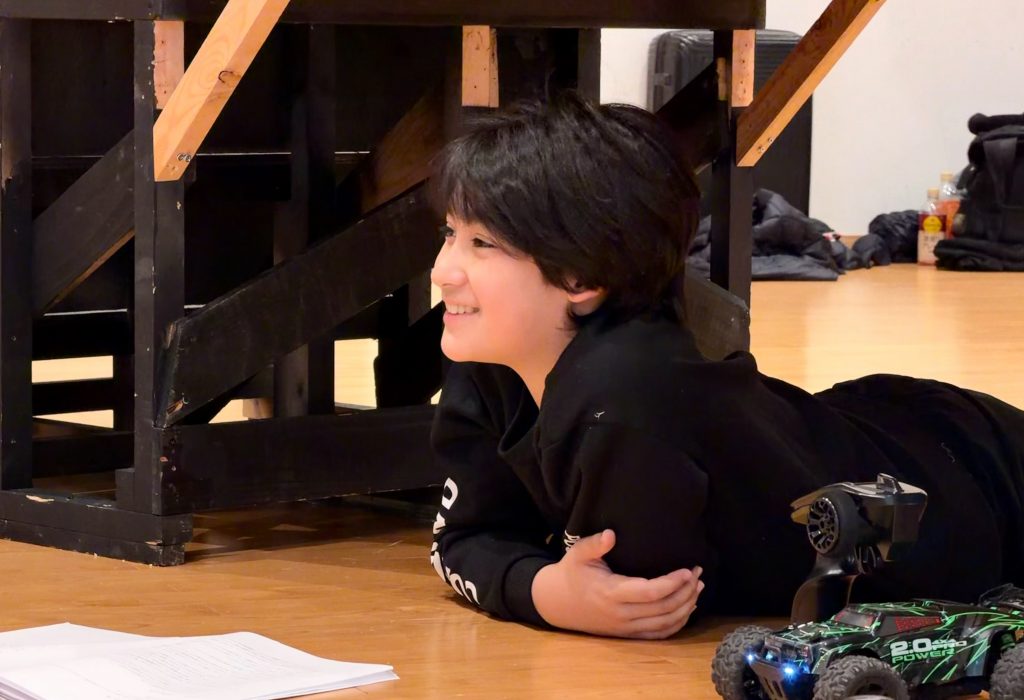
稽古場にて(撮影:張藝逸)
WIPでの経験は、2026年4月〜5月の「SHIZUOKAせかい演劇祭2026」での本公演に向けて、作品を次の形へと導いていきます。2月28日と3月1日に会場で起きることは、その日だけのものです。
科学館という場所
WIPの会場は、浜松科学館 みらい~らです。今回のWIPは、この科学館との共催で実現しました。
1月、出演者たちが初めてこの場所に足を踏み入れました。最初にしたのは、音の確認です。SPACの俳優とスタッフたちは、休憩時間も使って空間の反響を確かめていました。声がどう届くか、楽器がどう響くか。そして、この空間のどこに観客がいて、どこで演じるのか。劇場なら経験で予測できることも、科学館のホールでは一から考え直す必要があります。
この日、出演者たちは科学館のサイエンスショーにも出演しました。みらい~らのステージでは「SPAC×うえちゃんのコラボサイエンスショー」が実施されており、楽しみながら科学の原理を学べるプログラムになっています。科学館を訪れた親子連れの前で、出演者たちがパフォーマンスを披露しました。
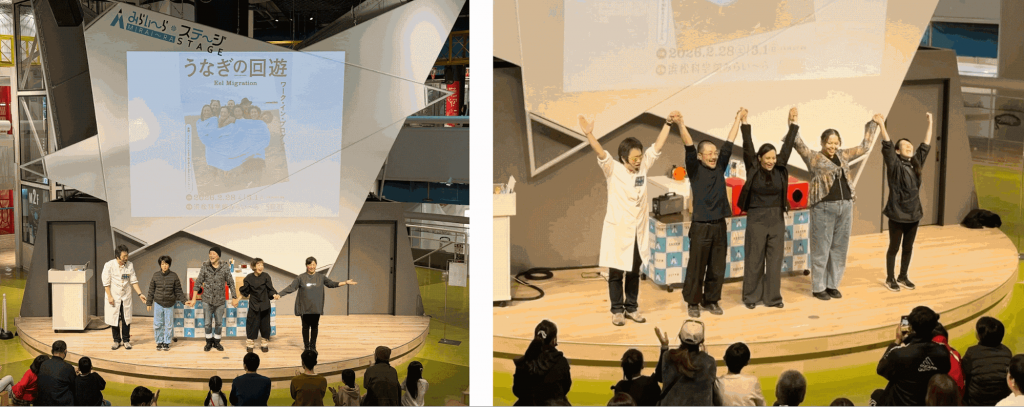
浜松科学館でのサイエンスショー(撮影:張藝逸)
みらい~らは2019年に常設展を全面更新し、コミュニケーションを重視する学びの場へと生まれ変わりました。大規模なサイエンスショーや体験型ワークショップ、全編ライブ解説のプラネタリウムが人気を集めています。私も常設展を見て回りましたが、展示の豊かさに驚きました。WIPの前後に、ぜひ立ち寄ってみてください。
会場が科学館であることには、もうひとつの意味があります。第3回で書いたように、この作品はうなぎの生態に関するフィールドリサーチから生まれました。科学が演劇に変わる過程を歩んできたこの作品が、科学館で上演されること。それは偶然以上のものだと感じています。
ここで待っています
4回にわたってこのシリーズを書きながら、私自身もこの作品と一緒に旅をしてきました。
第1回では、SPAC俳優とブラジルにルーツを持つ県民出演者たちが出会い、チェックインやブラジルフェスティバル、アミーゴ・セクレートを通じて関係を築いていく過程を記録しました。第2回では、楽譜を使わない棚川寛子の音楽のもとで、異なる言語や文化的背景を持つ出演者たちが互いの音を聴き合いながら、一つのアンサンブルをつくっていく姿を。第3回では、うなぎの生態調査や養殖場訪問といったリサーチが稽古場に持ち込まれ、作品の中で別のかたちをとり始める瞬間を。そして今回は、WIPという形と、科学館という場所について書きました。振り返ると、どの回も何かが「完成」する場面ではなく、何かが「始まる」場面を書いていたのだと思います。
WIPは、その「始まり」が観客と出会うときです。SPAC俳優の赤松直美、貴島豪、森山冬子、吉見亮。ブラジルにルーツを持つ県民出演者の相川アンジェラ、アイラ・ウェンディ、ペレイラ・ハセヤマ・クレイデ、矢野陽規。音楽の棚川寛子。そして石神夏希をはじめとする創作チームが、浜松科学館で待っています。
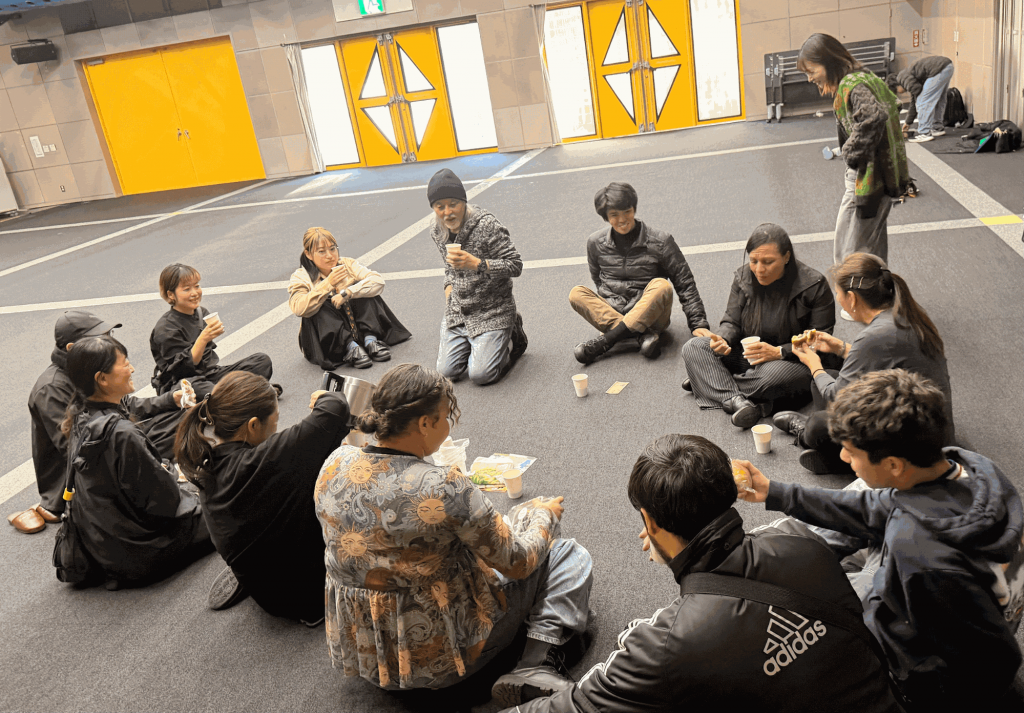
稽古場でブラジルコーヒーを囲む(撮影:張藝逸)
うなぎは、たどり着いた場所で生き始めます。この作品も、皆さんがたどり着いてくれた場所から、始まります。
公演情報
『うなぎの回遊 Eel Migration』ワーク・イン・プログレス公演
日程:2026年2月28日(土)、3月1日(日)各日13:30開演(終演後、アーティストトークあり)
会場:浜松科学館 みらい~ら ホール
上演時間:60分以内(予定)
上演言語:日本語(一部ポルトガル語)
静岡初演
「SHIZUOKAせかい演劇祭2026」にて初演いたします。
日程:2026年4月25日(土)、26日(日)、29日(水・祝)各日18:30開演
会場:舞台芸術公園 野外劇場「有度」
上演時間:90分(予定)
上演言語/字幕:
日本語上演(一部ブラジルポルトガル語)/日本語・英語・ブラジルポルトガル語字幕
*関連企画
フェスティバルcafe&bar ― Festa Brazil(ブラジル・ナイト)
4月25日(土)、26日(日)15:00~22:00
4月29日(水・祝)12:00~22:00
会場:せかいの劇場ミニミュージアム「てあとろん」
At the Place We Arrive: SPAC’s New Production “Eel Migration” WIP ④
Hello. This is Yiyi Zhang. I am a doctoral student at Tokyo University of the Arts researching transcultural theater, and I work as an intern at SPAC (Shizuoka Performing Arts Center). This is the final installment in the series documenting the creative process of SPAC’s new performance, “Eel Migration.” The first installment introduced the people involved, the second focused on the music, and the third explored the eel research. With the Work-in-Progress showing (WIP) just days away, this time I’d like to tell you about what awaits.
The WIP Format
A Work-in-Progress showing (WIP) presents a production that is still being made. It is not a finished piece.
The creation of “Eel Migration” spans roughly two years, beginning with the start of research in June 2024. The WIP is the first time this work will meet an audience along that long journey. What will happen is still unknown, even to the creators. There are things that only become visible when you stand before an audience. The WIP exists for that discovery. We’re looking forward to finding out. Please come and be part of it.
In rehearsal (photo: Yiyi Zhang)
The WIP experience will guide the production toward its next form, heading to the full premiere at the World Theatre Festival Shizuoka 2026 in April–May. What happens in the hall on February 28 and March 1 belongs to those days alone.
A Science Museum
The WIP will take place at Hamamatsu Science Museum “Mirai-ra.” This WIP is co-hosted with this museum.
In January, the performers set foot in the hall for the first time. The first thing they did was check the sound. SPAC actors spent their break testing the acoustics: how voices carry, how instruments ring. And where does the audience sit? Where do you perform? In a theater, you can draw on experience to anticipate these things. In a science museum hall, everything has to be rethought from scratch.
That day, the performers also took part in a science show at the museum. Mirai-ra hosts a program called “SPAC × Uechan’s Collaborative Science Show” on its Stage, where audiences can enjoy learning about scientific principles. The performers appeared before families visiting the museum, people who hadn’t come to see the theater.
Science show at Hamamatsu Science Museum (photo: Yiyi Zhang)
Mirai-ra underwent a full renewal of its permanent exhibitions in 2019 and has since been reimagined as a communication-centered learning space, drawing visitors with large-scale science shows, hands-on workshops, and a planetarium with fully live narration. I explored the exhibitions myself and was struck by how rich they are. If you’re coming to the WIP, I’d recommend visiting the museum before or after the performance.
There is another layer to the choice of venue. As I wrote in the third installment, this production was born from field research on eel ecology. A work that has walked the path from science to theater will now be performed inside a science museum. That feels like more than coincidence.
We’ll Be Waiting Here
Writing this series across four installments, I have been traveling alongside this production.
In the first, I documented how SPAC actors and community performers with Brazilian roots met and gradually built trust through check-ins, Brazilian festivals, and Amigo Secreto. In the second, how performers from different languages and cultural backgrounds learned to hear one another under composer Hiroko Tanakawa, who works without sheet music, creating an ensemble together. the third explored how eel research, from river surveys to farm visits, was carried into rehearsal and began to take new forms within the work. And in this final installment, the WIP format and the science museum as a venue.
Looking back, none of these installments captured something being “finished.” Each one captured something beginning.
The WIP is where those beginnings meet an audience. SPAC actors Naomi Akamatsu, Tsuyoshi Kijima, Fuyuko Moriyama, and Ryo Yoshimi. Community performers with Brazilian roots: Angela Aikawa, Ayla Wendy, Cleide Pereira Haseyama, and Haruki Yano. Composer Hiroko Tanakawa. Together with Natsuki Ishigami and the rest of the creative team, they are waiting at the Hamamatsu Science Museum.
Sharing Brazilian coffee in the rehearsal room (photo: Yiyi Zhang)
Eels begin to live at the place they arrive. This production, too, will begin from the place where you arrive.
Performance Information
“Eel Migration” Work-in-Progress Showing
Dates: February 28 (Sat) and March 1 (Sun), 2026, 1:30 PM(Artist talk after each performance)
Venue: Hamamatsu Science Museum “Mirai-ra” Hall
Running time: Under 60 minutes (tentative)
Languages: Japanese (with some Portuguese)
Shizuoka Premiere
We will premiere at the World Theater Festival Shizuoka.
Dates: April 25 (Sat), 26 (Sun), and 29 (Wed), 2026, each at 6:30 PM
Venue: Open Air Theatre “UDO”, Shizuoka Performing Arts Park
Duration: 90 minutes
Language:
In Japanese and Brazilian Portuguese with Japanese, English and Brazilian Portuguese surtitles
*Related Event
Festival cafe & bar ― Festa Brazil
Dates & Times:
April 25 (Sat) & 26 (Sun), 2026, 3:00 PM–10:00 PM
April 29 (Wed), 2026, 12:00 PM–10:00 PM
Venue: The Mini Museum of World Theatre in Shizuoka “THEATRON”


