こんにちは。張藝逸です。東京藝術大学の博士課程で越境する演劇を研究しながら、SPAC(静岡県舞台芸術センター)でインターンとして活動しています。
このシリーズでは、SPACの新作パフォーマンス『うなぎの回遊 Eel Migration』の創作過程を記録しています。産卵のために何千キロもの旅をするうなぎの生態と、1990年代以降に海を渡り静岡に根を下ろしたブラジルにルーツを持つ人々の人生を重ね合わせながら、約2年のフィールドリサーチをもとに生み出されたこの作品に向けて、WIPまでの4回では、作品に関わる「人たち」(第1回)、「音楽」(第2回)、「うなぎ」(第3回)、そしてWIP直前の「場所」(第4回)についてお伝えしました。「SHIZUOKAせかい演劇祭2026」での世界初演まで、引き続きこのシリーズをお届けしていきます。
今回は速報です。2月28日と3月1日、浜松科学館みらい~らでワーク・イン・プログレス公演(WIP)が行われました。WIPとは、制作途中の作品を観客の前で上演する、いわば創作の中間報告です。旅の途中を温かく見守ってくださったすべての皆さまへ、感謝を込めて、2日間の記録をお届けします。
(撮影:鈴木竜一朗)
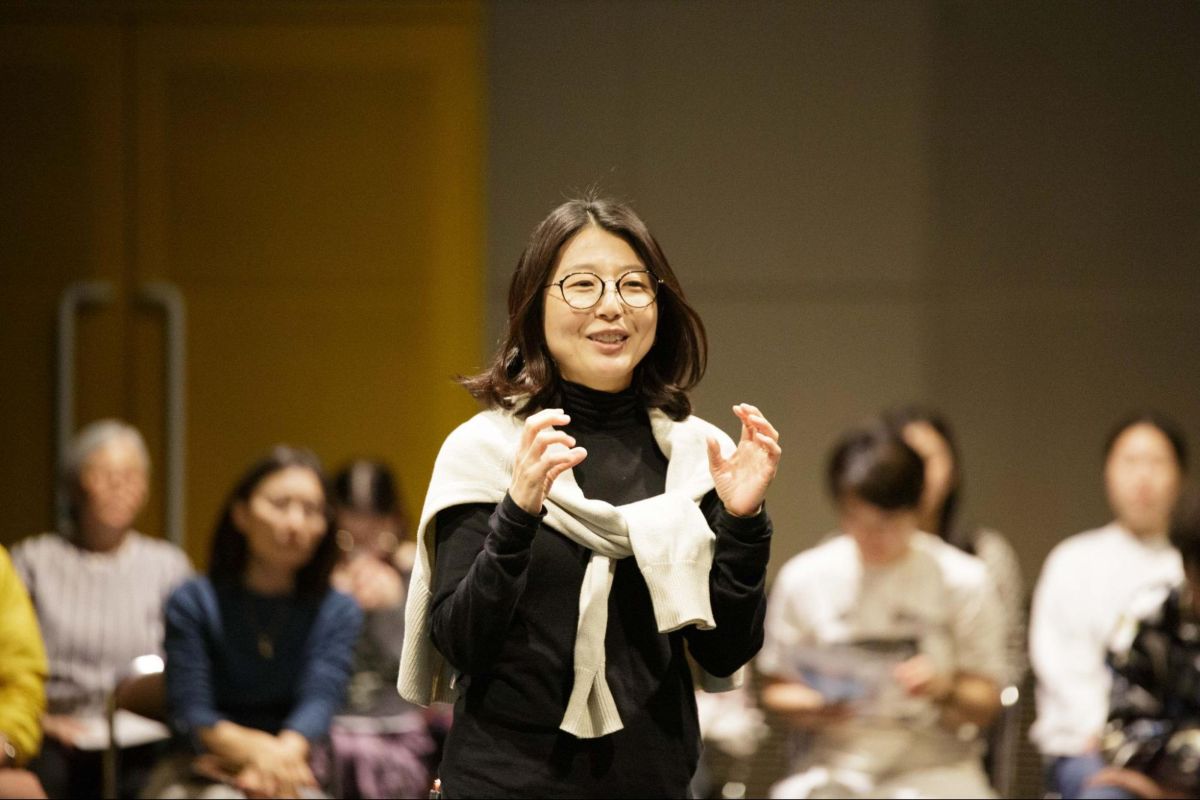
開演前、台本・演出の石神夏希が観客に語りかけました。「演劇は観客がいることで成り立つものです。やっていること、そのプロセス、つまり旅の途中を、多くの人にシェアしたい。今日ここにいる皆さんは、この旅に参加している仲間です」。その言葉を胸に、幕が上がりました。
渦の中へ
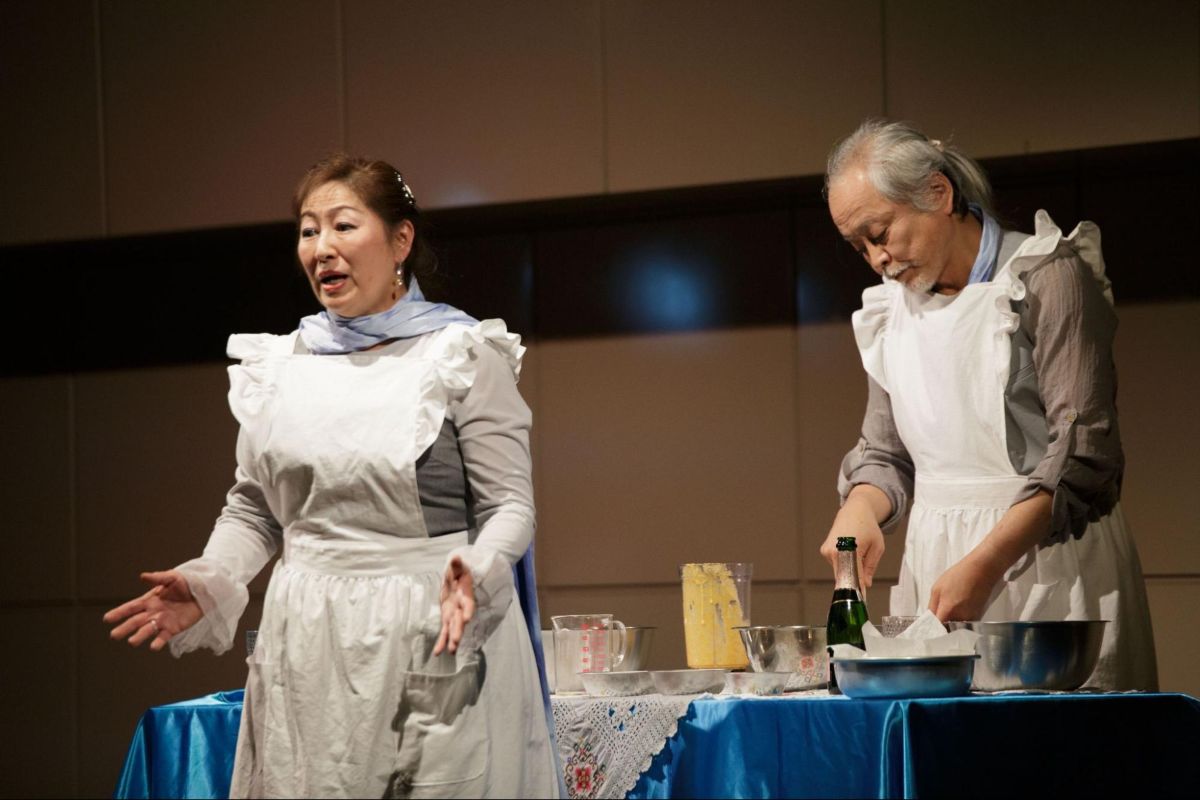
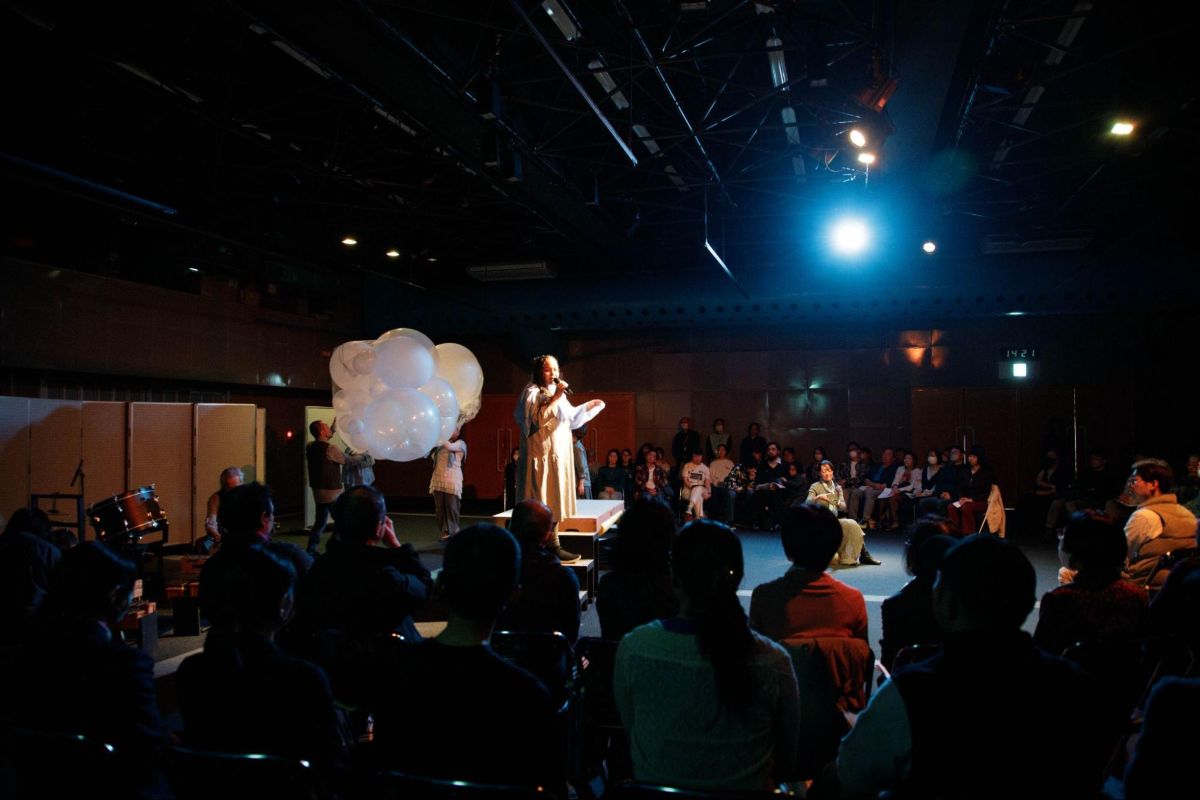
照明の樋口正幸と音響の和田匡史のフルパワーによって、科学館のホールは劇場へと変貌していました。その空間を支えるのは、舞台監督の下田寛典と演出部の降矢一美です。客席は舞台美術デザインの佐々木文美が設計した渦巻きの形に組まれ、観客はメイン舞台をぐるりと囲むように座りました。渦の外側には、サブ舞台「サントスの台所から」が広がっていました。アンジェラと貴島豪が、実際にキャロットケーキの生地をつくっています。客席から「レシピを配ってほしい」という声が上がるほどの臨場感でした。
(撮影:鈴木竜一朗)
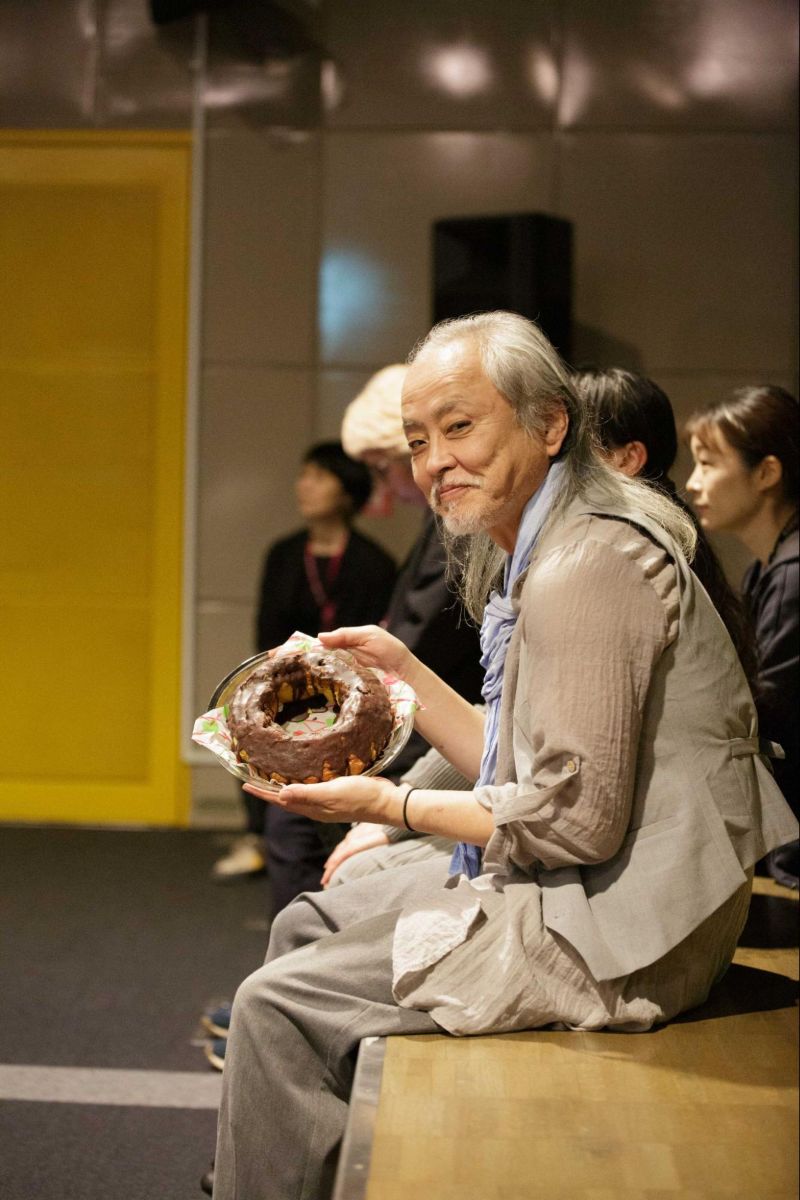
衛生上の理由から当日の配布は断念しましたが、アンジェラが生地を持ち帰り、翌日の公演前に焼き上げてきてくれました。できたてのケーキは2日間の観客の前にその姿を見せることができ、プロジェクトメンバーたちで毎日シェアしました。舞台で生まれたものが外へ出て、また戻ってくる。この作品の「循環」というテーマと、静かに響き合う出来事でした。本公演では、皆さんと一緒に食べられることを願っています。
(撮影:鈴木竜一朗)
音響にも工夫がありました。反響の少ないこの会場に合わせて、楽器エリアにマイクを設置し、その音を会場四隅のスピーカーから流す構成をとりました。開場前、客席がまだ空の状態で稽古を見ていると、いつもどこか空気が冷たかった。エアコンの風でテーブルのシートが常にひらひらと舞っていました。音楽家の棚川寛子とSPAC俳優の森山冬子から、「冷たい空気の中では音がきれいになる」という話を聞いていました。入場前にあえて温度を下げておくことで、観客が快適に鑑賞できる環境と音の美しさが、同時に成り立っていたのです。鉄琴の澄んだ音、鼓の響き。それらが科学館のホールをゆっくりと満たしていきました。
アンケートでも多くの観客が音楽の力を真っ先に挙げ、「音楽が循環している」「心に響く」という言葉が並びました。第2回でお伝えした、楽譜を使わず互いの音を聴き合うことで生まれる音楽が、客席にもしっかりと届いていたのです。渦の中心から広がるように、音もまた、この空間に集まった仲間たちを包んでいました。
(撮影:鈴木竜一朗)
ブラジル友だちチケット
今回のWIPでは、制作チームの坂中季樹と佐藤飛子から「ブラジル友だちチケット」という特別企画が用意されていました。
浜松市は、日本で最も多くのブラジル人が暮らす都市のひとつです。1990年代の入管法改正以降、日系ブラジル人を中心に多くの人々が働く場を求めてやってきました。現在も市内には約1万人のブラジルルーツの人々が暮らしています。第1回でも書いたように、『うなぎの回遊』は、そのコミュニティとともに作られた作品です。
公共劇場であるSPACが「誰のための劇場か」を問い直すとき、第1回でご紹介した石神の言葉が浮かびます。「劇場に足を運ばない人と出会いたい」。「ブラジル友だちチケット」は、その問いへのひとつの答えでした。ブラジルにルーツがある人だけでなく、「何かしらのつながり」があれば誰でも使える割引チケットです。ブラジルのフェスに行ったことがある、友だちにブラジル人がいる、カポエイラをやったことがある、サンバが好き。どんなつながりでも構いません。来場者はボードに自分とブラジルとのつながりを書き込み、その言葉の前で写真を撮る人もいました。今回のWIPでは字幕の設置はなかったものの、ポルトガル語訳の脚本も用意されました。
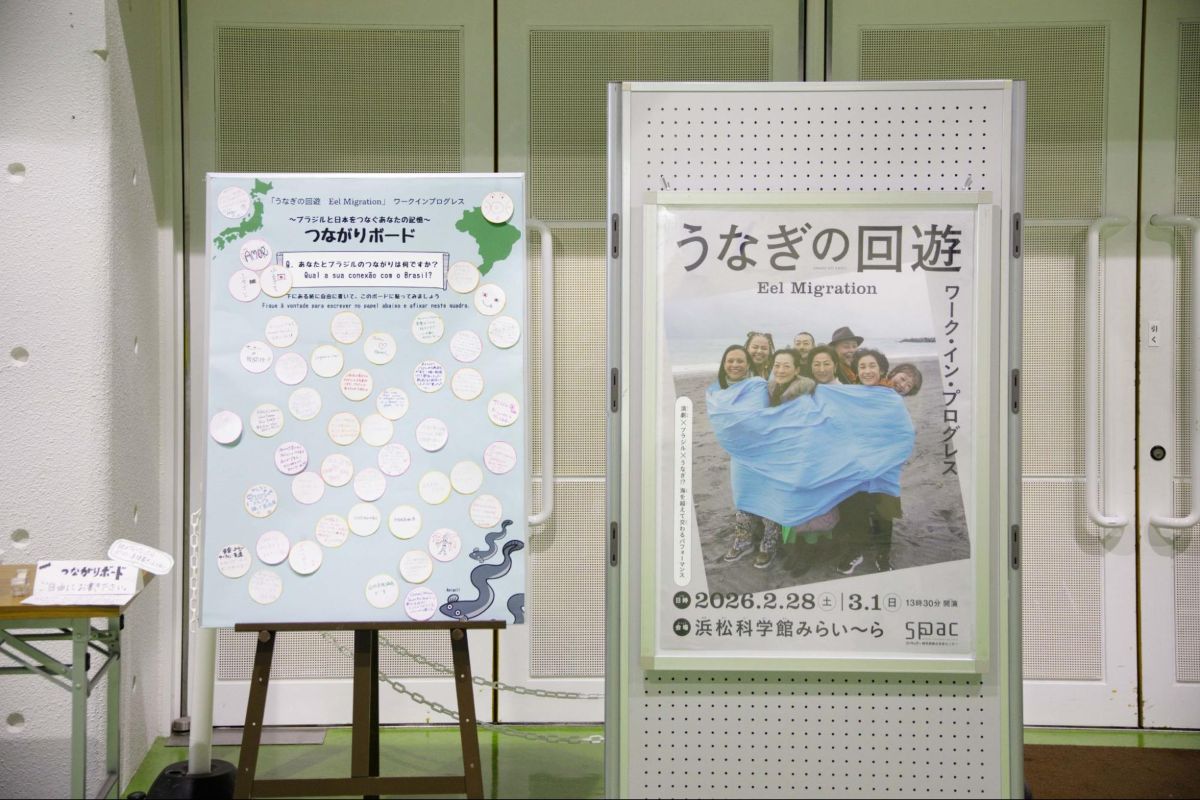
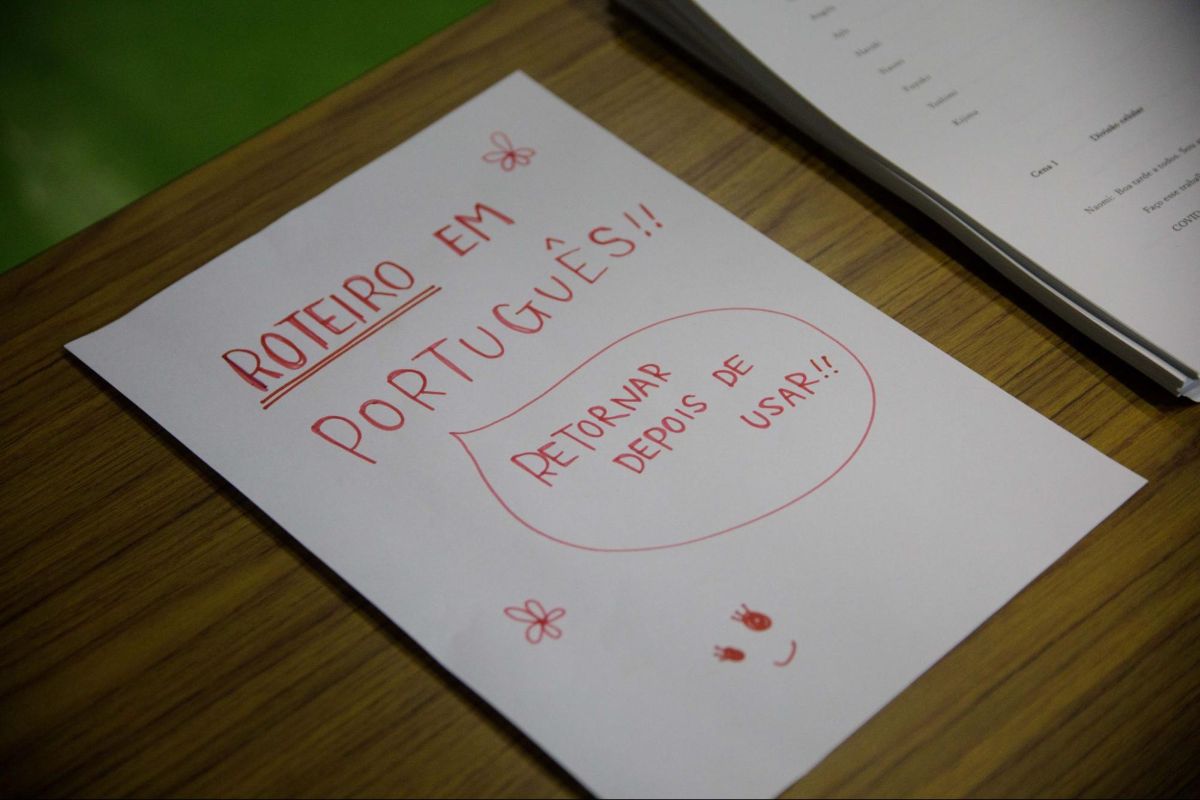
(撮影:鈴木竜一朗)
言語の壁や距離によって、普段は劇場から遠ざかっていた人たちの姿がそこにありました。旅の仲間は、劇場の外にもいたのです。「演劇鑑賞でこんな体験ができるとは思わなかった」「異文化交流ともいえた」。アンケートに残されたそんな言葉が、それを証明していました。
科学館という舞台
劇場ではない場所で上演するということは、その場所とともに作品を作るということでもあります。ゲネプロ(本番と同じ条件で行う最終リハーサル)の日、浜松科学館みらい~らの上野さんが見にきてくれました。本番さながらにすべてが動き始めたそのとき、舞台道具を運ぶ場面で、出演者の髪が静電気で立ってしまうというハプニングが起きました。稽古場では一度も起きなかった問題です。スタッフが頭を抱える中、上野さんはすぐに笑顔で答えてくれました。「入場前に、後ろのパーテーションに触れて放電するといい。整髪料も効きますよ」。「これは科学の力だ」と、その場の全員が喜びました。想定外のことが起き、その場所にいる仲間の知恵が助けてくれる。上野さんもまた、旅の仲間でした。
公演後、上野さんからメッセージが届きました。今回の公演をきっかけに初めて科学館を訪れた方が多かったこと、科学館がアートの発信拠点となった意義と価値を広く伝えられたこと。第4回で「会場が科学館であることには、もうひとつの意味がある」と書きました。アートが科学館へやってきて、科学が舞台裏を助け、それまで科学館に来なかった人たちが扉をくぐり、互いを変え合う2日間でした。
WIPは、その「始まり」が観客と出会うときです。SPAC俳優の赤松直美、貴島豪、森山冬子、吉見亮。ブラジルにルーツを持つ県民出演者の相川アンジェラ、アイラ・ウェンディ、ペレイラ・ハセヤマ・クレイデ、矢野陽規。音楽の棚川寛子。そして石神夏希をはじめとする創作チームが、浜松科学館で待っています。
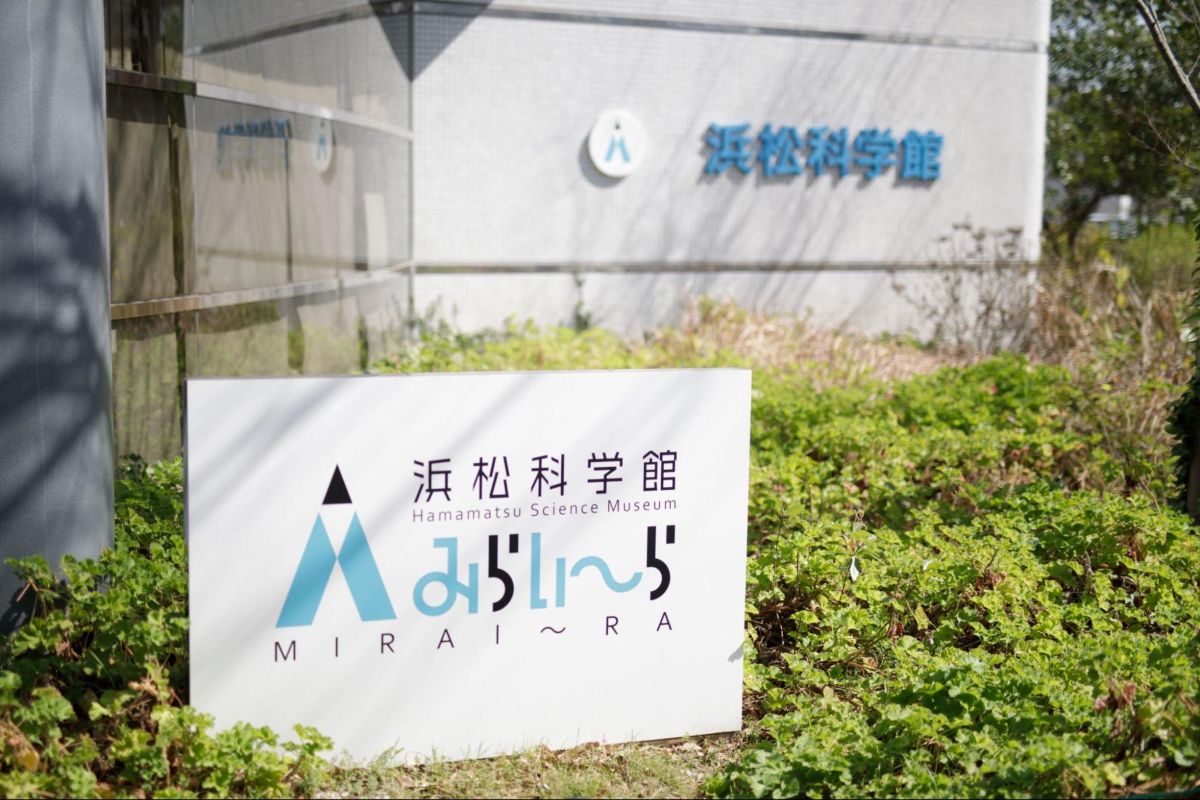
(撮影:鈴木竜一朗)
「私、呼ばれている」
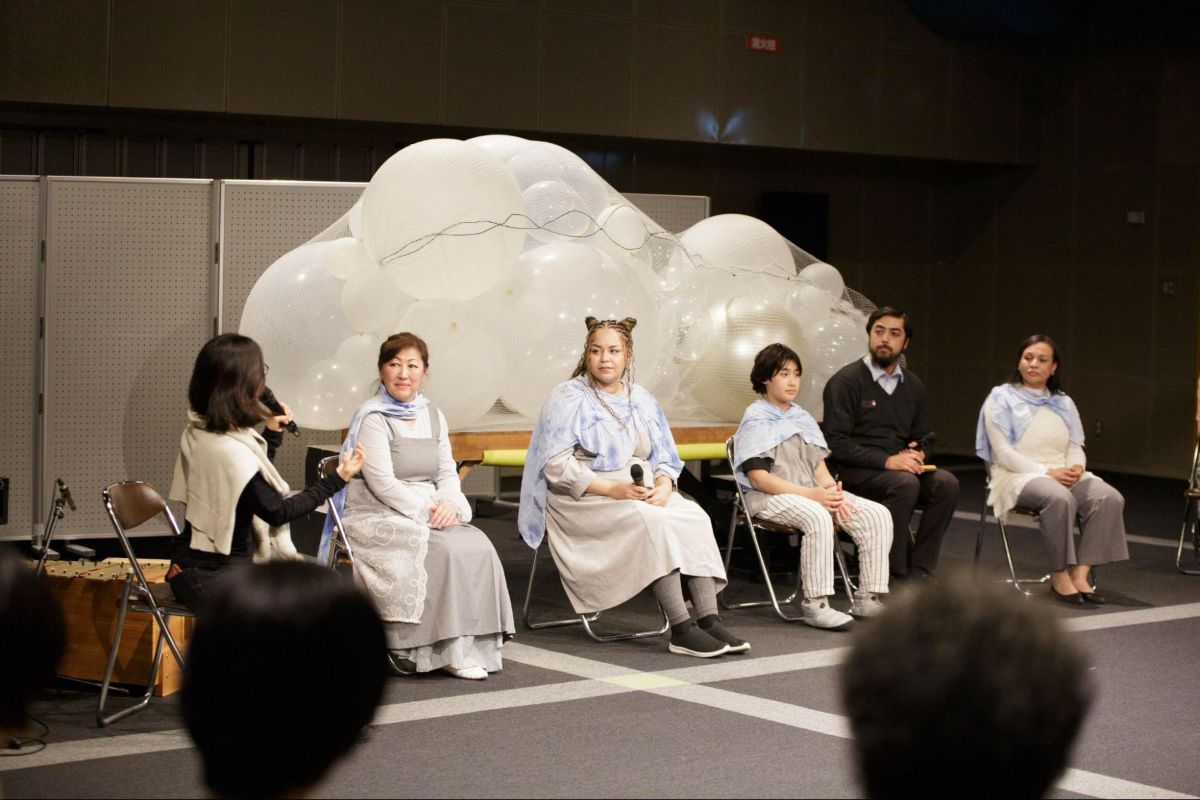
WIPでは公演後にアフタートークが行われ、ブラジルにルーツを持つ県民出演者4人が、自分の言葉で観客に語りかけました。
 アイラ(アイラ・ウェンディ)は、子どものころからずっと歌や演技に憧れていたと話しました。大人になって、大好きだったことはいつの間にか遠くなり、表現する機会も失われていた。ある日、自分の住む団地でSPACのチラシを見つけた。「私、呼ばれている!」と思って応募したといいます。参加してみると、自分でも知らなかった面が引き出されていきました。「やるよ、できるよ」「できたじゃん、すごいね」。そう言ってもらえることで、自分の中にあるとは知らなかったものが表に出てきた。
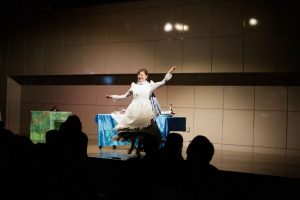 アンジェラ(相川アンジェラ)は、母国語ではない言語で演じることの難しさを語りました。心の中ではポルトガル語で考えて、表現は日本語で出す。その切り替えがとても難しい。それでも「子どもたちにもいい刺激になれば」と、楽しんで参加していると話しました。
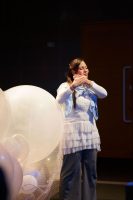 クレイデ(ペレイラ・ハセヤマ・クレイデ)はポルトガル語で語り、通訳の宮本ルーカスがその言葉を日本語へ届けていきました。ブラジルポルトガル語手話を使う教師として言葉以外の表現に関心を持っていたこと、日本に来てからは言語の壁があってその機会がなかったこと。SPACのチラシを見て応募したら、まさか自分が舞台に立つとは思っていなかった。「日本語が話せない」と伝えたら、「大丈夫、助けるから」と言ってもらえて、参加を決めたと話しました。
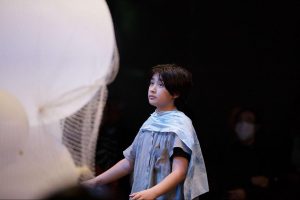 ハルキ(矢野陽規)は、台本を一人で覚えることの難しさを語りました。今までは親に手伝ってもらっていたけれど、今回は一人で頑張った。「思った以上に自分でも頑張れるんだなって、改めて知りました」。
(撮影:鈴木竜一朗)
アンケートでは、4人の存在感に心を動かされたという声が相次ぎました。「輝いていた」「迫力があった」「キラキラしていた」。静岡に暮らすブラジルルーツの人々がアートの主役として舞台に立つ意義を感じた、という言葉も寄せられました。
(撮影:鈴木竜一朗)
やがて観客の質問によって話題がうなぎへ移ったとき、4人の答えはそれぞれ違いました。アイラは「うなぎとブラジルの移民?」と最初は不思議に思ったけれど、話を聞くうちに「接点がたくさんある」と気づいた。ハルキは「教科書でうなぎの回遊は読んだことあるけど、ブラジルのことは一言も書いてない」と笑いました。クレイデは、稽古を重ねるうちにうなぎと移民のつながりを感じていったと語ります。
“Pessoas que vão, voltam, depositam seus filhotes, seus ovos em algum lugar e retornam, voltam para buscar…”
(行って、帰って、卵をどこかに置いて、また迎えに戻る……)
アイラが演じる劇中の台詞が、その場の空気を変えました。
「うなぎは生まれる場所は選ばない、死ぬ場所も選ばない」
「そうだ、私たちもそうなんだ」
いつどこで生まれ、いつどこで死ぬのか、本当にうなぎのように選べない。
「その言葉にすごく刺されました」
アフタートークが終わると、出演者とブラジルの友だちが抱き合っていました。言葉よりも先に、体が動いていました。
旅はまだ途中です
『うなぎの回遊 Eel Migration』は、「SHIZUOKAせかい演劇祭2026」にて世界初演を迎えます。浜松科学館の渦巻きから、SPACの拠点の1つである野外劇場「有度」へ。場所が変われば、作品も変わります。次回は、WIPを経て稽古場がどう変わったのか、出演者やチームの声をお届けします。
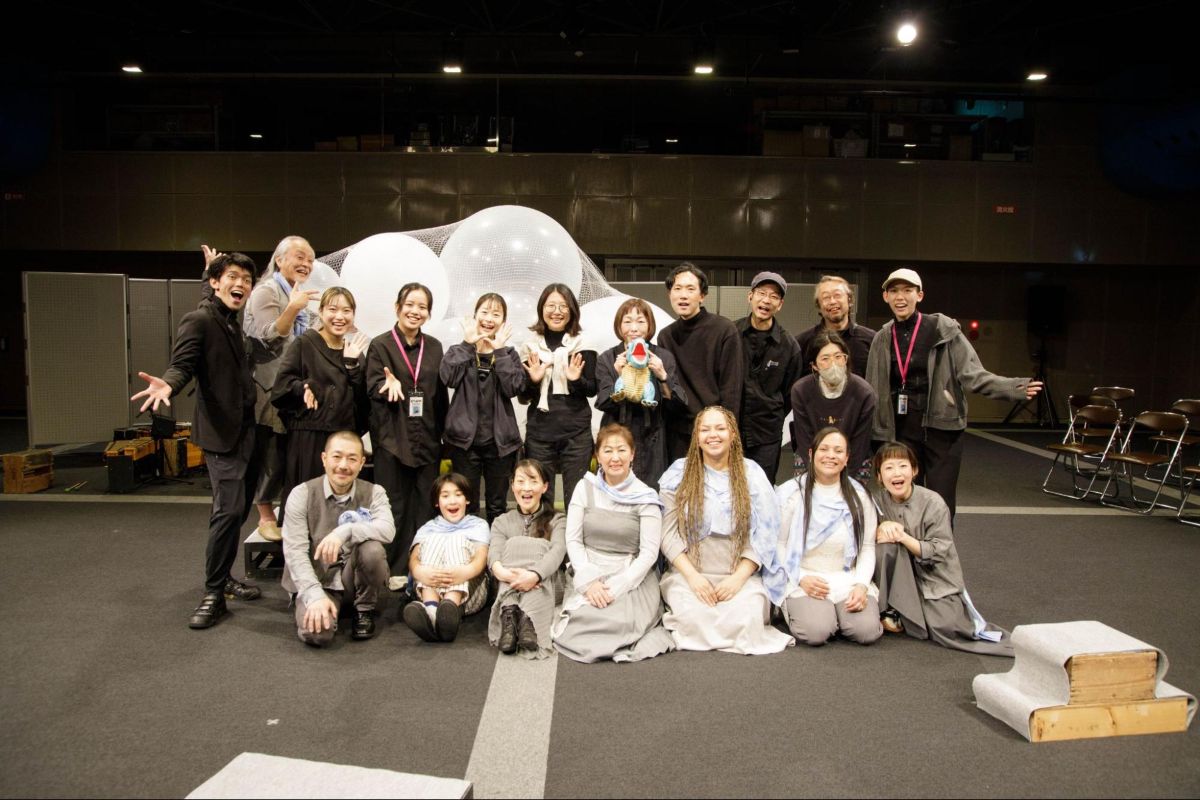
最後に、WIPの実現に力を貸してくださったすべての方に感謝を伝えたいと思います。浜松科学館みらい~らの皆さま、通訳の宮本ルーカスさん、ご来場いただいた観客の皆さま、そしてこの創作を支えてくださっているすべてのスタッフの皆さま。ありがとうございました。
石神が開演前に語ったように、この旅はまだ途中です。そして、このシリーズを読んでくださっている皆さんもまた、旅の仲間です。これからも見守ってください。
(撮影:鈴木竜一朗)
公演情報
世界初演|SHIZUOKAせかい演劇祭2026
『うなぎの回遊 Eel Migration』台本・演出:石神夏希
日程:2026年4月25日(土)、26日(日)、29日(水・祝)各日18:30開演
会場:静岡県舞台芸術公園 野外劇場「有度」(静岡市)
上演時間:90分(予定)
言語・字幕:上演言語/字幕:
日本語上演(一部ブラジルポルトガル語)/日本語・英語・ブラジルポルトガル語字幕
チケット・詳細はこちらをご覧ください。
*関連企画
フェスティバルcafe&bar ― Festa Brazil(ブラジル・ナイト)
4月25日(土)、26日(日)15:00~22:00
4月29日(水・祝)12:00~22:00
会場:せかいの劇場ミニミュージアム「てあとろん」
To Fellow Travelers: A WIP Report on SPAC’s New Production Eel Migration
Hello. This is Yiyi Zhang. I am a doctoral student at Tokyo University of the Arts researching transcultural theater, and I work as an intern at SPAC (Shizuoka Performing Arts Center).
In this series, I have been documenting the creative process of SPAC’s new production, Eel Migration, a work that interweaves the ecology of eels, which travel thousands of kilometers to spawn, with the lives of people with Brazilian roots who have crossed oceans to make their home in Shizuoka, built on approximately two years of field research. Leading up to the WIP, I wrote about the people involved in the production (Part 1), its music (Part 2), the eels themselves (Part 3), and the venue on the eve of the WIP (Part 4). This series will continue through to the world premiere at the Shizuoka World Theater Festival 2026.
This installment is a flash report. On February 28 and March 1, a Work-in-Progress showing (WIP) took place at the Hamamatsu Science Museum “Mirai-ra”, the first time this production met a public audience. With gratitude to everyone who joined us on this journey, here is a record of those two days.
(Photo: Ryuichiro Suzuki)
Before the curtain rose, Natsuki Ishigami, who writes and directs the piece, spoke to the audience. “Theater only comes to life when there is an audience. I want to share what we are doing, and the process of getting there, this journey in progress. Everyone here today is a fellow traveler.” With those words held close, the performance began.
Into the Vortex
A Work-in-Progress showing (WIP) presents a production that is still being made. It is not a finished piece.
Through the combined craft of lighting designer Masayuki Higuchi and sound designer Masashi Wada, the science museum’s hall had been transformed into a theater. Stage manager Tomonori Shimoda and production staff Kazumi Furuya kept the space alive. Set designer Ayami Sasaki had arranged the seating in the shape of a vortex, with the audience wrapping around the central stage on all sides. At the outer edge of the vortex, a sub-stage called “From Santos’ Kitchen” came to life. Angela Aikawa and Tsuyoshi Kijima were there, kneading the dough for an actual carrot cake. The scene was so vivid that someone in the audience called out, “Can we have the recipe?”
(Photo: Ryuichiro Suzuki)
For hygiene and safety reasons, the cake couldn’t be served to the audience during the event. Angela took the dough home and baked it before the second performance. The finished cake was brought back for both audiences to see, and shared among the project members each day. Something born on stage had traveled out into the world and returned. It felt like a quiet echo of the production’s central theme: circulation.
(Photo: Ryuichiro Suzuki)
There was also careful thought given to the sound. To compensate for the venue’s low reverberation, microphones were set up around the musical instruments, and the sound was channeled through speakers at all four corners of the hall. Before the audience arrived, while watching rehearsal in the empty, cold space, I noticed the air always felt slightly cold; an air-conditioning draft kept lifting the sheets on the tables. Composer Hiroko Tanakawa and SPAC actor Fuyuko Moriyama mentioned that sound actually rings cleaner in cold air. By deliberately lowering the temperature before the doors opened, the team managed to achieve both audience comfort and acoustic clarity at once. The bright tones of the metallophone, the resonance of the Japanese drum. They filled the hall slowly, completely.
Many audience members mentioned the music first in their surveys. “The music circulates,” wrote one. “It reaches something deep inside,” wrote another. As described in Part 2, this music is made without scores, born from performers listening to one another, and it reached the audience in exactly that spirit. Like sound radiating from the center of a vortex, the music enveloped everyone gathered in that space.
(Photo: Ryuichiro Suzuki)
The Brazil Friends Ticket
Toshiki Sakanaka and Hiko Sato from the production team created a special initiative for the WIP called the “Brazil Friends Ticket.”
Hamamatsu is one of the cities in Japan with the largest Brazilian population. Following the 1990 revision of Japan’s immigration law, many Japanese Brazilians came seeking work. Today, approximately 10,000 people with Brazilian roots live in this city. As described in Part 1, Eel Migration was created together with this community.
When a public theater asks itself “who is this theater for?”, the answer has to go beyond its usual audience. Ishigami’s words from Part 1 come back here: “I want to meet the people who don’t come to the theater.” The Brazil Friends Ticket was one answer to that question. The discount was available not only to people with Brazilian roots, but to anyone with “any kind of connection” to Brazil: having been to a Brazilian festival, having a Brazilian friend, having tried capoeira, or simply loving samba. Any connection counted. Visitors wrote their connection to Brazil on a board at the entrance; some stopped to take photos in front of their words. Though the WIP did not have live surtitles, Portuguese-language scripts were made available.
(Photo: Ryuichiro Suzuki)
People who might ordinarily feel that theater was not a space for them were there. The fellow travelers of this journey were also outside the theater walls. “I didn’t know a theater experience could feel like this,” wrote one audience member. “It was also an act of intercultural exchange,” wrote another.
The Science Museum as Stage
To perform in a place that is not a theater is to make a work together with that place. On the day of the dress rehearsal, Ueno-san from Hamamatsu Science Museum came to watch. As the full run-through began in earnest, an unexpected thing happened: during a scene involving the movement of props, the performers’ hair stood up from static electricity, something that had never occurred in rehearsal. While the production team puzzled over it, Ueno-san immediately smiled and offered a solution. “Have them touch the partition at the back before going on. It discharges the static. Hair products also help.” The room burst out laughing: “This is the power of science.” When the unexpected happens and the knowledge of the people around you comes to the rescue: Ueno-san, too, was a fellow traveler.
After the performances, Ueno-san sent a message: many visitors had come to the science museum for the very first time because of this production, and the experience had helped communicate the value of the museum as a site for art. In Part 4, I wrote that there was “another meaning” to holding the WIP in a science museum. Art came to the science museum, science helped backstage, and people who had never entered those doors before finally walked through them. Two days of mutual transformation.
“I Was Called”
After each performance, an artist talk was held, and the four community performers with Brazilian roots took the stage to speak in their own words.
Ayla Wendy spoke of a longing for singing and performance that had stayed with her since childhood. As an adult, the things she had loved drifted further away, and the chances to express herself disappeared. Then one day, she found a SPAC flyer in her apartment complex. “I felt called,” she said, and applied. Participating in the production drew out sides of herself she hadn’t known were there. “You can do it.” “You did it, amazing.” Being told those things brought something to the surface that she hadn’t known existed.
Angela Aikawa spoke about the difficulty of performing in a language that isn’t her mother tongue. Inside, she thinks in Portuguese, but the feelings have to come out in Japanese. The switch is hard. Even so, she said she was enjoying the experience, hoping it would also be a good inspiration for her children.
Cleide Pereira Haseyama spoke in Portuguese, with interpreter Lucas Miyamoto rendering each word into Japanese. As a teacher who uses Brazilian Sign Language, she had long been drawn to expression beyond words, but since coming to Japan, the language barrier had closed off those opportunities. When she saw the SPAC flyer and applied, she never imagined she would end up on stage. When she told them she couldn’t speak Japanese, the response was: “That’s okay, we’ll help you.” That was what made her decide to join.
Haruki Yano spoke about the challenge of memorizing his lines on his own. Before this production, he had always had his parents help him. This time, he did it himself. “I found out that I could do more than I thought I could,” he said.
(Photo: Ryuichiro Suzuki)
Audience surveys were filled with responses moved by the four performers’ presence: “radiant,” “powerful,” “full of light.” Several wrote that they felt the significance of seeing people with Brazilian roots in Shizuoka taking center stage as the heart of a work of art.
(Photo: Ryuichiro Suzuki)
When the audience’s questions turned to eels, the four performers each responded differently. Ayla had wondered at first: eels and Brazilian immigrants? But as she listened, she kept finding more and more points of connection. Haruki laughed: “I’ve read about eel migration in school, but there was not a single word about Brazil.” Cleide described how, over the course of rehearsals, she had come to feel the connection between eels and migrants deeply.
“Pessoas que vão, voltam, depositam seus filhotes, seus ovos em algum lugar e retornam, voltam para buscar…”
(They go, they return, they leave their young, their eggs somewhere, and they come back to find them…)
A line that Ayla delivers in the production shifted something in the room.
“Eels don’t choose where they are born. They don’t choose where they die.”
“That’s us too.” When and where you are born, when and where you die, you truly cannot choose, just like an eel.”
“That line went straight through me.”
When the artist talk ended, the performers and their Brazilian friends held each other. The bodies moved before the words could.
The Journey Continues
“Eel Migration” will have its world premiere at the Shizuoka World Theater Festival 2026. From the vortex of the science museum to SPAC’s outdoor stage of Udo at Shizuoka Performing Arts Park. As the place changes, so will the work. In the next installment, I will share how rehearsals have shifted since the WIP, through the voices of the performers and the team.
Finally, thank you to everyone who helped make this WIP possible: the staff of Hamamatsu Science Museum Mirai-ra, interpreter Lucas Miyamoto, the audiences who came, and all the staff who have supported this creation. Thank you.
As Ishigami said before the curtain rose, this journey is still underway. And everyone reading this series is a fellow traveler. Please keep watching over this project.
(Photo: Ryuichiro Suzuki)
Performance Information
World Premiere|Shizuoka World Theater Festival 2026
“Eel Migration” Script and Direction: Natsuki Ishigami (SPAC)
Dates: Saturday, April 25, and Sunday, April 26, Wednesday, April 29, 2026, each at 6:30 PM
Venue: Open Air Theatre “UDO”, Shizuoka Performing Arts Park
Running time: Approx. 90 minutes
Languages: Japanese and partial Brazilian Portuguese with Japanese, English and Brazilian Portuguese surtitles.
Tickets and further information: please visit the SPAC official website.
*Related Event
Festival cafe & bar ― Festa Brazil
Dates & Times:
April 25 (Sat) & 26 (Sun), 2026, 3:00 PM–10:00 PM
April 29 (Wed), 2026, 12:00 PM–10:00 PM
Venue: The Mini Museum of World Theatre in Shizuoka “THEATRON”


